How Much Does a Diesel Fuel Filter Change Cost?

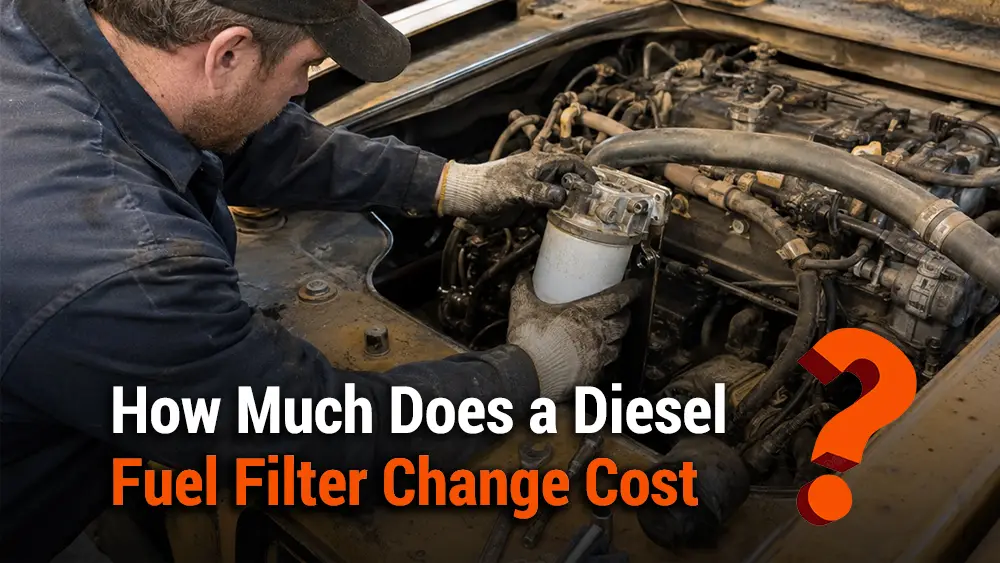
A diesel fuel filter seems like a tiny part, but its health can make or break your engine. In the field, I’ve seen machines limp to a stop because a clogged filter starved the engine of fuel. Equipment owners search this topic when they notice hard starts or loss of power and worry about repair bills. It’s natural to ask: “Should I replace the fuel filter now or wait?” and “How much will it cost?”
Replacing the filter on schedule is cheap insurance. The filter itself is usually inexpensive, but delaying the change can lead to serious damage. In practice, a plugged filter can let water and debris bypass it and wreck the fuel pump or injectors – easily turning a small job into a five-figure repair. In this guide, we break down the real costs of a fuel filter change, what affects those costs, and how to keep your engine running without surprises.
Average Diesel Fuel Filter Change Cost
On average, you’ll pay about $160–$650 if a pro replaces your diesel fuel filter (parts and labor together). Here’s how that breaks down in real jobs:
- Professional service (parts + labor): Typically $160–$650 total. This range covers common construction machines like excavators, loaders, and tractors. Factors include how many filters your machine has and regional labor rates.
- DIY with aftermarket parts: If you do it yourself and buy quality aftermarket filters, parts often run only $20–$100 total for two filters. Then you save the entire labor bill.
- Dealership or OEM service: Dealers quote higher, often $300–$800+, because OEM parts and dealer rates are more expensive.
Bear in mind, fuel filters are cheap components but require care to replace correctly. Most heavy diesels actually have two filter elements – a primary (fuel/water separator) and a secondary (fine filter). Always factor both into your estimate. The labor portion often makes up 40–60% of the bill, since modern diesels need careful bleeding after any fuel system work. In short, even if a filter is only a few bucks, getting it replaced professionally drives the cost up into the hundreds.
Your actual cost depends on your machine and location. Certified diesel mechanics often charge $150–$250 per hour (higher in big cities). A straightforward filter swap usually takes 0.5–1.5 hours, so expect roughly $75–$375 in labor. For example, a half-hour job in the Midwest might be only $75–$125 (at ~$150/hr), while a complex change on a big rig in the Northeast could be $100–$200 just in labor.
Even so, compare that to the cost of neglect. A clogged filter can cause fuel starvation and let contaminants through. In practice, that often leads to $1,500–$5,000+ in repair for injection parts. Sticking with your filter schedule costs a tiny fraction of that.

Labor Cost
Changing a diesel fuel filter looks simple but isn’t always “quick fix” level. It requires mechanical know-how and proper procedure. Key factors that influence labor cost:
- Hourly Rate: Diesel specialty shops now average around $150–$270 per hour, varying by location. (See, for example, northeast shops at $190–$270/hr versus the Midwest at $150–$230.)
- Accessibility: If the filter is buried under covers or near hydraulic lines, it can take longer. Some engines allow hand-tight access; others need panels removed. More time under the hood = higher labor cost.
- System Priming: After any filter change, air must be bled from the fuel system. Modern common rail diesels often need vacuum-bleeding, hand pumps, or even scan-tools to reprime cleanly. Extra priming steps add 15–30 minutes of labor.
- Labor Time: A routine change typically takes 0.5–1.5 hours. If the machine is in good shape, that might be on the lower end. But if the technician encounters issues (hard-to-reach bolts, stuck fittings, or unexpected leaks) it can take longer.
Real-world example: at $180/hour, one hour of labor adds $180 to the bill. That’s why doing a filter at the same time as an oil change or other service can save money (you pay one trip charge).
Parts Cost
The filter element itself is where you have the most control over price. Most heavy diesel machines use two filter elements (a primary water separator and a secondary fine filter). So plan on buying two if you’re doing it all at once.
Typical prices per filter element are roughly $60–$150 each for OEM/dealer parts and $20–$60 each for good aftermarket. Buying a pair of quality aftermarket filters from a supplier can cut your parts cost significantly – sometimes by 50–70% compared to OEM. For example, you might pay $120-$300 for two genuine filters versus $40-$120 for two aftermarket ones.
Make sure to match your engine: filters have different sizes, thread types, and micron ratings. A wrong filter won’t seal properly, causing leaks, or it may not filter out as much contamination. Trusted aftermarket brands meet strict specs and often include warranties, giving you savings without risking protection.
If you shop for filters, compare “maintenance kits” that include both elements or the filter plus a drain/wrench. For instance, our fuel filter maintenance kits category bundles common filters for many models. That can save time (you get both filters ready) and sometimes a bit on parts cost. Also keep an eye on fuel/water separators – many machines have a separate bowl or sedimenter that should be serviced at the same time.

Hidden Costs That Can Raise Your Bill
Even a standard filter change can balloon if there are surprises. A savvy equipment manager always gets quotes that cover these possibilities:
- Fuel contamination: The biggest risk of a neglected filter is water and debris in the fuel. If the filter collapses or the bypass valve has been open, contaminants may reach the injection pump or injectors. Fixing a corroded pump or injector can easily run $1,500–$5,000+. That’s why shops often check fuel condition when a filter is heavy. Bottom line: a cheap filter now prevents very expensive repairs later. We stock replacements for injectors and pumps, like our Injectors & Nozzle parts, if contamination strikes.
- Two filters: Heavy equipment often needs two elements. Your quote should clearly include both the primary separator and secondary filter. If a quote is low, confirm it’s not just for one filter—otherwise you’ll pay more later for the second.
- Diagnostic time: If your machine was already acting up (hard starting, surging, stalling), the mechanic may spend extra time diagnosing. Sometimes what seems like a bad filter could be an air leak or a failing pump. Expect an extra 30–60 minutes of shop time if there are symptoms on arrival.
- Priming complexity: If the shop has to crawl under the hood with scan-tools or special pumps to purge air, that adds labor. Common-rail diesels often need a power-bleed or computer “fuel prime” after changing filters. Ask if the quote includes system priming (some shops roll it into the job, others itemize it).
- Warranty work: If your equipment is still under warranty, dealers may insist on OEM parts and perform diagnostics, which can add hidden fees. If you go aftermarket outside warranty, you avoid some of that cost (though you also lose the warranty cover on that service).
By covering these points up front, you won’t be surprised when the final bill comes in. A complete quote for a filter change should say: “two filters, labor, bleeding, plus any test or draining.”

How to Lower Diesel Fuel Filter Change Costs
Even with fixed parts and labor, you can shave dollars off the final price with these strategies:
1. Use Quality Aftermarket Filters
Swapping to a reputable aftermarket brand (like the ones we stock) can cut parts cost by roughly 50% or more compared to OEM. For example, a high-grade aftermarket filter might cost $20–$50 instead of a $60–$150 dealer filter. Many aftermarket filters meet or exceed OEM specs and even come with warranty. Just be sure to buy from a trusted source (see our fuel filter maintenance kits category, which offers filters built for specific machine models). Over time, these savings really add up – you could save hundreds over multiple filter changes.
2. Do It Yourself (If You’re Comfortable)
Changing filters can be a DIY job if you have basic diesel skills and proper tools. Draining the filter housing, swapping elements, and bleeding the fuel system can all be done outside a shop. Doing it yourself can save $100–$400 in labor charges. Of course, only attempt this if you know what you’re doing: work cleanly to avoid introducing dirt, follow the bleed procedure, and use new seals or O-rings. Dispose of the old filter and drained fuel properly (many areas require recycling). A good habit is to replace both filters at once and bleed the system carefully to avoid airlocks – a little troubleshooting can cost more in time than paying a mechanic, so be sure you can finish the job.
3. Follow the Maintenance Schedule
Catching filter changes at the recommended interval prevents most problems. Typically, diesels require a new filter every 200–500 operating hours or once a year, whichever comes first. Check your owner’s manual or service sticker for the exact number. If you run in dusty or humid conditions, shorten that interval (say every 250 hours instead of 500). Staying on schedule means the filter is never so dirty that it collapses or causes power loss. It also prevents emergency breakdowns that often cost more. Write the next filter change on your calendar or maintenance log to avoid forgetting.
4. Combine Service Jobs
Mechanics often bill a flat fee for a service visit up to a certain number of hours. If your machine is due for oil and filter changes, coolant flush, or valve adjustments, bundle those tasks in one appointment. Many shops will give you a small labor discount for doing multiple services at once (for example, doing an oil change and filter change together might add only 15 minutes extra labor instead of starting fresh). This saves on travel time and may qualify you for seasonal maintenance deals. Always ask: “If we do X, Y, and Z services together, can we save time or money?”

Quick FAQs
How often should I change my diesel fuel filter?
Typically every 200–500 hours of operation or once a year. The exact interval depends on your machine and use. Check the owner’s manual or service schedule on the equipment. If you work in extremely dusty or wet conditions, consider changing filters at the shorter end of that range (for example, 250–300 hours) to avoid clogged or waterlogged filters.
What are the signs of a bad or clogged fuel filter?
Common symptoms include:
- Power loss under load: The engine sputters or can’t maintain RPM when digging or climbing, because it’s starved of fuel.
- Hard starting or stalling: The engine cranks but takes a long time to catch (or won’t start) because fuel isn’t reaching the injectors smoothly.
- Rough idle or misfiring: The engine shakes or runs unevenly even at idle, indicating inconsistent fuel flow.
- Fuel smell or leaks: You might smell diesel around the filter if there’s a crack or loose fitting.
- Visible contamination: On some filters you can see water in the bowl or a dirty element when you inspect it.
All these signs typically point to a restricted fuel supply. Replacing the filter usually restores full power and responsiveness.

Can I change the fuel filter myself?
Yes—if you have basic mechanical experience, you can save money by doing it yourself. Make sure to work clean: keep debris out of the fuel lines, replace seals, and prime the system fully when done. Use quality filters and follow the bleed procedure for your engine (some diesels have priming pumps or valves). If done incorrectly, trapped air can cause hard starting, so only DIY if you’re confident. Otherwise, a professional install is the safer bet.
Do I have one or two fuel filters on my machine?
Most modern diesel machines use two stages of filtration: a primary filter (often a fuel/water separator mounted near the tank or frame) and a secondary fine filter near the engine. The primary catches water and large debris; the secondary protects the injection system from fine particles. Both should be replaced together to fully clear the fuel system. Check your engine diagram: if it shows two filter icons, you likely need two elements.
Conclusion
A diesel fuel filter change is one of the most affordable preventive steps you can take, especially compared to the cost of engine repairs. In short: expect to spend a few hundred dollars on a filter swap done by a shop, or under $100 on parts if you DIY. Don’t skip it—a clogged filter can lead to much more expensive failures. Use this guide to get the right filters and plan the work. For example, explore our fuel filter maintenance kits to find the correct replacement filters for your machine, and check out our Injectors & Nozzle section if your injection system needs parts.
By staying ahead of filter changes and choosing quality parts, you’ll keep your diesel engine running strong without unexpected bills.


