
Bad Fuel Pump Relay Symptoms on Heavy Equipment

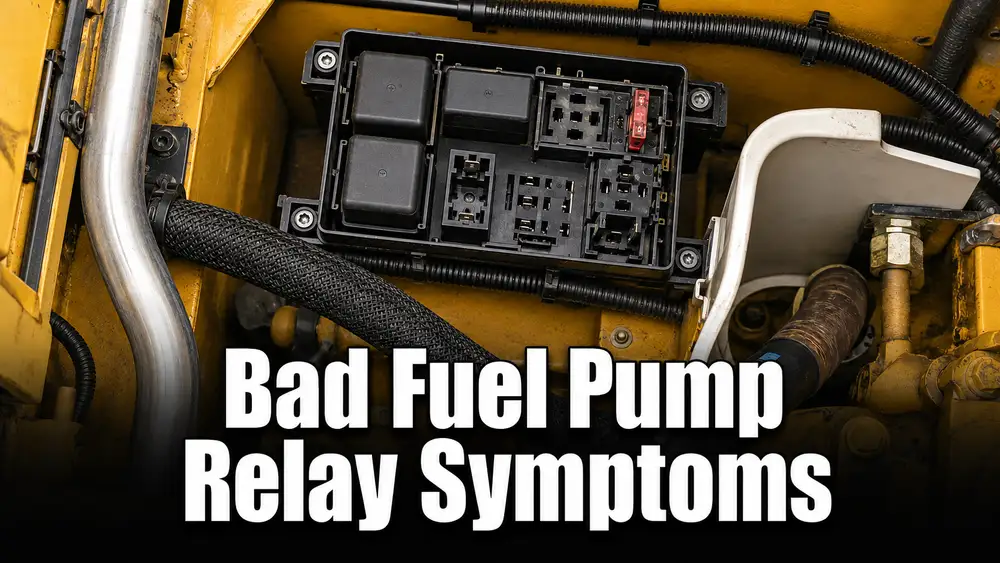
An excavator cranks at normal speed but will not start. A tractor starts after several tries, then stalls when it gets hot. These are common bad fuel pump relay symptoms, but a blown fuse, damaged wire, weak fuel pump, or clogged filter can cause the same trouble.
Check the relay circuit before ordering a fuel pump. A few simple tests can show whether power stops at the relay, in the wiring, or at the pump. This guide explains the process for excavators, loaders, tractors, and other diesel-powered heavy equipment.

What Does a Fuel Pump Relay Do?
The fuel pump relay works like an electrical switch. A small signal from the key switch or engine control module turns the relay on. The relay then carries battery power to the electric fuel pump.
The starting sequence often works like this. Each part of the circuit has one clear job:
- The operator turns the key to ON or START.
- The engine controller sends a control signal to the relay.
- The relay closes its internal contacts.
- Battery power flows through the relay to the fuel pump.
- The pump moves fuel toward the engine.
If the relay does not close, the pump may receive no power. If the contacts have high resistance, the pump may receive low voltage and run too slowly. If the contacts stick closed, the pump may keep running after shutdown.
Not every diesel engine uses a separate fuel pump relay. Older engines may use a mechanical lift pump, while newer machines may place the control inside a sealed power module. Confirm the system before removing parts.
Where Is the Fuel Pump Relay Located?
Most machines place the relay in a fuse or power distribution box. The box may sit in the engine compartment, beside the battery, behind the operator’s seat, or under a cab panel. The lid often includes a diagram that names each fuse and relay.
Large machines may have more than one electrical panel. One panel may serve the cab, while another serves the engine. Use the operator or service manual for the machine serial number instead of relying on a general online diagram.
The relay usually looks like a small plastic cube with four or five blades. Do not identify it by color alone. Read the part number and the circuit diagram printed on the case.

6 Bad Fuel Pump Relay Symptoms
A weak relay often works at some times and fails at others. Heat, vibration, moisture, and worn contacts can make the fault appear and disappear. Look at what the machine does, then confirm the cause with a test.
1. The Engine Cranks but Will Not Start
The starter turns the engine, but the engine never fires. If the relay stays open, the electric supply pump cannot move fuel toward the injection system. The engine may start after several tries, then develop a complete no-start condition later.
First confirm that the engine cranks at normal speed. Slow cranking points toward the battery, cables, or starter circuit. Use the starter solenoid symptoms guide when the engine does not crank normally.
A normal crank-no-start can still come from an empty tank, closed fuel valve, clogged filter, air leak, failed pump, shutdown solenoid, or missing ECM command. The symptom tells you to test the fuel supply circuit; it does not prove the relay is bad.
2. The Machine Stalls While Working
An excavator may dig normally for 20 minutes and then stop without warning. Worn relay contacts can open as they heat up. Vibration can also break contact at a loose relay socket.
The engine may restart after the machine sits and cools. This hot-fail, cool-restart pattern makes the relay and socket worth checking. Watch whether pump voltage disappears at the same time as the stall.
3. The Engine Loses Power Under Load
Burned or corroded relay contacts can restrict current without stopping it completely. The fuel pump then receives less voltage and may not maintain the required fuel supply. The machine can hesitate, surge, or feel weak while digging, lifting, or climbing.
Low power has many other causes. A clogged fuel filter, blocked tank outlet, air leak, worn pump, or injector problem can produce the same result. Check pump voltage and fuel pressure before replacing the relay.
4. The Fuel Pump Is Silent When It Should Run
Some electric pumps make a low hum during key-on priming or cranking. If the manual says the pump should run and you hear nothing, power may not be reaching it. The fault may sit in the fuse, relay, wiring, ground, or pump motor.
Do not assume every machine should prime for the same number of seconds. Some pumps run only during cranking or after the controller receives an engine-speed signal. Use the operating sequence for the installed engine.
5. The Fuel Pump Keeps Running After Shutdown
A relay with welded contacts can stay closed after the key is removed. The pump may continue humming, and the battery may be weak the next morning. A wiring short or control-module fault can also hold the circuit on.
Use the battery disconnect switch when the service manual allows it, then find the cause. Do not leave an unattended pump running.
6. A Warning Light or Fuel-Pump Circuit Code Appears
Some electronic engines monitor the relay control circuit. A warning lamp or diagnostic code may appear when the controller detects an open circuit, short, or unexpected voltage. The code description and test steps vary by machine and engine.
Record the exact code before clearing it. A circuit code does not always mean the relay itself has failed. It may point to the fuse, connector, control wire, pump load, or controller output.
How to Check a Fuel Pump Relay
Park on level ground, lower all attachments, apply the parking brake, and follow the machine lockout procedure. Keep sparks and open flames away from fuel. Disconnect the battery before removing a fuse, relay, or connector unless the service test calls for live power.
Step 1: Confirm When the Pump Should Run
Find the pump, fuse, and relay on the wiring diagram. Check whether the pump should run at key-on, during cranking, while the engine runs, or only during a service command. A silent pump means little if the controller is not commanding it at that moment.
Also confirm that the machine has an electric supply pump and a serviceable relay. This prevents time spent searching for a part that the system does not use.
Step 2: Check the Fuse, Relay, and Socket
Remove power and inspect the correct fuse. Replace a blown fuse only with the specified rating. If it opens again, stop and check for a shorted wire, wet connector, damaged socket, or pump motor that draws too much current.
Pull the relay and inspect its blades and socket. Look for green corrosion, dirt, water, loose terminals, melted plastic, or a burned smell. A new relay will not last if the socket remains loose or overheated.
Step 3: Try an Identical Relay
You can make a quick comparison when the fuse box contains a known-good relay with the exact same part number. Match the pin layout, coil voltage, contact rating, and internal resistor or diode. Two relays that fit the same socket may not work the same way.
Install the known-good relay and repeat the starting test. If the pump and engine now work normally, the original relay becomes the main suspect. Still inspect the socket because moving the relay may have restored a loose connection for a short time.
Step 4: Check Power Through the Relay
Use the wiring diagram and a digital multimeter. Common relays may use terminal 30 for battery power, 87 for switched output, and 85 and 86 for the control coil, but your relay may differ. Follow the diagram printed on the part and in the service manual.
Answer three simple questions while the pump should be running. The answers show which part of the circuit needs attention:
- Does the relay receive the correct battery supply?
- Does the relay receive its control command?
- Does power leave the relay and reach the pump?
If supply power and the control command are present but no power leaves the relay, the relay or socket is faulty. If power leaves the relay but does not reach the pump, check the harness and connectors. If correct power and ground reach the pump but it does not run, test the pump.
Check voltage while the circuit carries the pump load. A loose or corroded terminal can show normal voltage with the pump disconnected, then lose voltage when current flows.
Step 5: Confirm Fuel Pressure or Flow
A running pump can still be weak. Use the approved pressure or flow test and compare the result with the engine specification. Do not open a high-pressure common-rail line to check fuel delivery.
Correct electrical power with low supply pressure points away from the relay. Check the filter, tank outlet, suction line, air leaks, fuel condition, and pump. This last test stops a relay problem and a fuel-delivery problem from being confused.
Is the Relay, Wiring, or Fuel Pump Bad?
Use the test results to follow the power path. Do not choose a part from the symptom alone.
| What You Find | Most Likely Area to Check Next |
|---|---|
| No power at the relay supply terminal | Fuse, battery feed, disconnect switch, or power-distribution wiring |
| Supply power is good, but there is no control command | Key switch, safety interlock, ECM power, control wire, or controller logic |
| Supply and command are good, but relay output is missing | Relay contacts or relay socket |
| Relay output is good, but power is missing at the pump | Harness, connector, splice, or pump ground |
| Correct power and ground reach the pump, but it does not run | Fuel pump motor or internal pump fault |
| Pump runs, but pressure or flow is low | Filter restriction, tank outlet, air leak, wrong pump, or worn pump |
This order gives a clear answer in most cases. It also finds combined faults, such as a weak socket feeding a pump that draws too much current.
Why Fuel Pump Relays Fail
Relay contacts wear each time the pump switches on. Heat, vibration, moisture, dust, and loose terminals speed up that wear. A pump motor that begins to seize can also draw more current and overheat the relay and socket.
Keep electrical boxes clean and dry. Make sure the covers seal, the relay fits tightly, and the battery connections stay clean. Repair burned terminals or water entry before installing a replacement relay.
Never fit a larger fuse to stop repeated fuse failure. The fuse protects the harness. A higher rating can allow the wiring to overheat.
Check Fitment Before Ordering
Match the machine model, machine serial number, engine model, engine serial number, and original relay part number. Also check 12V or 24V coil voltage, four-pin or five-pin layout, contact rating, internal diode or resistor, sealing, and mounting style.
If testing shows that the fuel pump has failed, confirm its pressure, flow, connector, ports, and mounting position. A pump can fit physically and still deliver the wrong fuel supply. Review the fuel pump buying guide before ordering.
The Bottom Line
Bad fuel pump relay symptoms include a crank-no-start condition, stalling after heat or vibration, weak performance, no expected pump sound, a pump that stays on, and circuit warnings. Start with the fuse and socket, try only an identical relay, then follow power from the relay to the pump. Confirm fuel pressure before replacing the pump.
When testing confirms a failed pump or related fuel-system part, compare diesel fuel pump . Send the machine and engine details through Request for Quote, or contact our team for help checking fitment.


