
How Much does it Cost to Replace an Alternator?

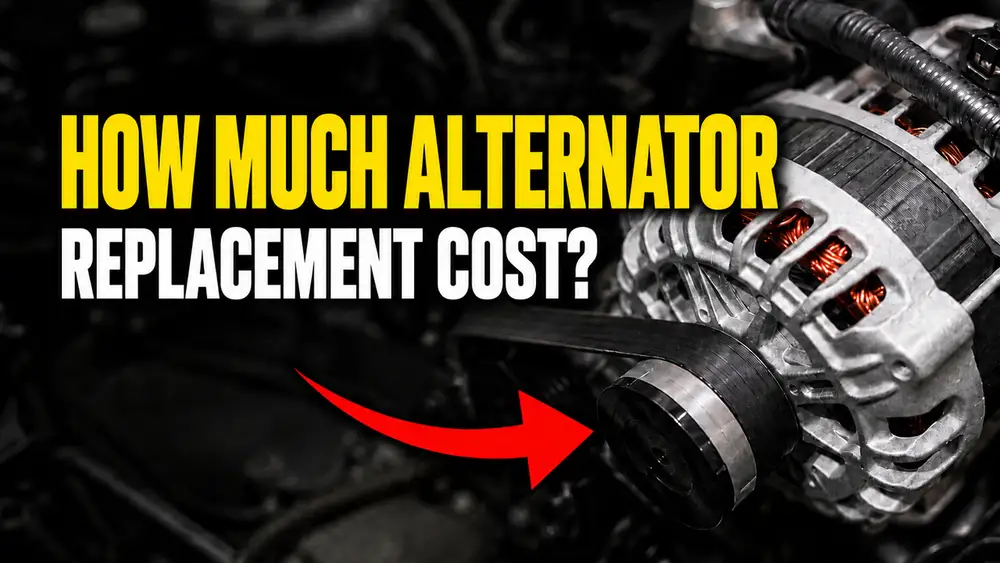
A battery warning light comes on halfway through a loader’s shift. The batteries test low, so the first quote includes a new alternator. The part may cost less than $200, but diagnosis, access, labor, travel, and damaged charging-system parts can raise the installed bill.
There is no honest flat price for every tractor, excavator, loader, or dozer. Three published-data examples in this guide total $249.42, $479.80, and $1,293.99 before tax, freight, supplies, travel, and added repairs. They show how the part, labor method, and machine size change the result.
This guide separates the alternator price from the full repair cost. All figures are U.S. dollar planning estimates, not flat-rate quotes.
Why Does the Alternator Matter?
The starter uses stored battery power to crank the diesel engine. Once the engine runs, the alternator supplies electrical power and restores the energy taken from the batteries. A working alternator keeps system voltage stable as machine demand changes.
That job goes far beyond the lights and radio. Engine controllers, displays, sensors, fuel controls, electronic joysticks, HVAC blowers, safety beacons, cameras, and telematics all need steady voltage. Some machines also use electric solenoids to control hydraulic functions, although the alternator does not create hydraulic pressure.
When alternator output falls, the battery bank carries the electrical load until its voltage drops. The machine may then show several unrelated fault codes, reset its display, lose control functions, or shut down. High or unstable charging voltage can be just as harmful because it can overheat batteries and stress electronic modules.
This is why a charging complaint needs testing before replacement. A weak battery, slipping belt, damaged cable, poor engine ground, failed disconnect switch, or open fuse link can produce the same warning light. Replacing a good alternator leaves the real fault in the machine and adds another parts bill.

How Much Does It Really Cost to Replace an Alternator?
Two identical machines, both requiring alternator replacement, might have bills of $800 and $2400 respectively. The price difference isn’t due to the parts themselves, but rather the cost of DIY or in-store repair support. Before starting alternator replacement, let’s understand some potential costs—diagnostic fees, labor costs, travel expenses, and inspection fees.
Machine Make, Model, and Size
A compact tractor and a 40-ton excavator do not use the same charging system. Larger or highly equipped machines may need a heavier 24V alternator with more output and stronger mounting hardware. The unit may also sit deeper behind guards, brackets, cooling ducts, or another belt.
The machine model alone does not identify the alternator. Production changes can place different engines or charging packages in the same model series. Two alternators can share a similar housing yet use different mounting-ear spacing or belt offset. The wrong unit may bolt to one point but place the pulley out of line. Return freight and a second day of downtime can cost more than the original price difference.
What to do: Record the machine serial number, engine model, complete alternator part number, voltage, amperage, pulley type, connector style, and terminal layout before you order. Do not rely on the model name alone.

OEM vs. Aftermarket Parts
An OEM alternator follows the machine manufacturer’s supply chain and application listing. This can simplify warranty work or support a machine with a controlled electrical specification. The dealer price and lead time may be higher, so ask for a delivered quote rather than comparing list prices alone.
A new aftermarket alternator can reduce parts cost on an out-of-warranty machine. The word “aftermarket” does not prove quality. Check the manufacturer, rated output, test evidence, warranty terms, seller support, and full part-number match.
A remanufactured alternator reuses a serviceable core. Ask which parts were replaced and how the regulator, rectifier, rotor, stator, bearings, brushes, and output were tested. Include the core charge, return shipping, and return deadline when comparing the price.
A local rebuild can work when the original housing and major electrical parts remain sound. It also helps when a rare replacement has a long lead time. Review the alternator rebuild guide before treating a low rebuild estimate as equal to a tested replacement.
Amperage and Output
Alternators are rated by voltage and current output, but the number printed on the tag is not the whole story.
Official data from Delco Remy shows the gap between label and reality:
| Model | Rated Output | Efficiency | Typical Comparison |
|---|---|---|---|
| 28SI (12V) | 160–200A | 68–70% | Industry-standard brush-type units typically run 54–60% |
| 40SI | 240–320A | 70%+ | High-efficiency designs can deliver fuel savings up to 28% over standard brush-type competitors |
Delco Remy states that its 28SI, 36SI, and 40SI series operate at 68–70% efficiency, well above the industry-typical 54–60% for standard brush-type alternators. In long-haul fleet applications, switching to high-efficiency units has shown fuel-cost savings potential of 20%, with some scenarios reaching 28%.
Source: Delco Remy – Save on Fuel Costs;
Source: Delco Remy – Efficient Alternators Equal Fuel Savings
3 easy‑to‑miss facts about alternators:
- Low‑speed output drops An alternator often cannot hit its full rated current when the engine idles. Low idle numbers alone do not mean the part is broken. Real‑world output falls: 80‑85 % of its label rating in hot weather, and only 40‑50 % at idle. Correct tests need set engine speed, electric load, temperature and test spots.
- Drive belts have power limits Old‑style V‑belts can safely handle roughly 100 amps. If you swap to a higher‑amp alternator (for example from 160 A to 240 A) but ignore belt type and belt tension, the new alternator cannot work at full power, and the belt will wear out fast.
- Big‑amp alternators cost more and need matching parts More copper, bigger rectifiers, tougher regulators and heavier cases make high‑amp alternators more expensive. Do not pick one just because its amp number is higher. You also need proper cables, fuses, mounts, cooling and regulator settings. Start with your machine’s original specs.
Repair Labor Cost
Labor fees for machine repair differ across areas, so there is no single national standard rate.
2025–2026 Official Cost Data
- Fullbay surveyed over 3,400 repair shops in North America. The middle hourly pay for heavy equipment fix work hit $149 in 2025, up 7.41% from $135 in 2024.
- National Autobody Research’s June 2026 report shows the US average machinery repair labor cost is $163 per hour, rising 11.6% from last year’s $146.
Real Shop Hourly Rate Examples
- C&A Equipment in Texas charges $95 per hour to fix loaders, diggers, farm and building machines.
- TractorCo in Washington asks for $175 per hour for on-site service. Customers must pay for at least two working hours, plus travel distance fees.
Time to Change an Alternator
- Easy-to-reach alternators take 1–2 hours to test and replace.
- Alternators hidden behind engine parts, pipes or belt systems need many more hours.
- Rusty bolts, tight adjusters, thick dirt and broken wire clips all make repairs slower.

Associated Repairs
An experienced technician checks the parts that drive, connect, and support the alternator. A glazed belt may slip under load. A seized tensioner, rough idler, loose mount, or misaligned pulley can shorten the life of the new unit.
High resistance in the B+ cable, ground strap, disconnect switch, fuse link, or terminal creates heat and voltage loss. Repair that fault before installing the replacement. A new alternator cannot overcome a damaged charging path.
The battery bank also belongs in the diagnosis. One weak 12V battery in a 24V series pair can leave the bank unbalanced and keep the alternator under high demand. Test each battery instead of adding batteries to every estimate without evidence.
Ask the shop to separate required now from recommended while open. A belt, cable, connector, battery, tensioner, bracket, or pulley should appear as its own line. This prevents associated repairs from becoming an unexplained alternator charge.
This check prevents unnecessary parts returns. In its construction and forestry remanufactured-components manual, John Deere states that many returned alternators are still good. Deere points technicians toward poor connections, a loose belt, and a loose pulley nut when output is low or batteries keep discharging. That evidence belongs in the estimate before a replacement unit does.

How Much Is an Alternator?
Amoparts checked its live alternator catalog on September 1, 2026. The site had 165 published alternator products with listed prices from $59.42 to $593.99. The median price was $154.80, and the middle half of the listings ran from $124.20 to $220.50.
Those numbers describe aftermarket parts in the Amoparts catalog. They do not include tax, freight, labor, core charges, or every OEM and specialized alternator on the market. The complete part number can still move a specific quote outside this range.
The following examples use real Amoparts listing prices and the published labor rates cited above. The time assumptions make the math transparent; they are not customer invoices or manufacturer flat-rate times.
| Published-Data Example | Part and Labor Calculation | Subtotal* |
|---|---|---|
| Easy-access Kubota compact machine | $59.42 for alternator 15531-64017 + 2.0 assumed hours × C&A’s $95 rate | $249.42 |
| Kubota KX-series excavator | $154.80 for 12V 40A alternator 66436-64010/66436-64014 + TractorCo’s $130 diagnostic minimum + 1.5 assumed installation hours × $130 | $479.80 |
| Large Komatsu machine with a mobile call | $593.99 for 24V 90A alternator 600-825-9111/600-825-9110 + All World’s four-hour minimum × $175 | $1,293.99 |
Method note: The part prices were live Amoparts listings on September 1, 2026. Labor rates come from the linked service providers. The compact example assumes 0.5 hour for diagnosis and 1.5 hours for installation. The excavator example uses the posted diagnostic minimum plus 1.5 installation hours. Tax, freight, shop supplies, travel, core charges, access work, and other failed parts remain separate.
The compact example lands below $250 because the part is inexpensive and the assumed job takes two shop hours. The KX-series example reaches $479.80 because electrical diagnosis is billed separately from installation. If TractorCo’s posted five-percent shop-supplies charge applies to the $325 labor amount, it adds another $16.25.
The Komatsu example reaches $1,293.99 before travel because the field-service minimum costs more than the alternator. It does not claim that every Komatsu installation takes four hours. It shows how a minimum callout can control the bill even when the wrench time is shorter.
These calculations explain why a low online parts price and a high installed quote can both be real. Rebuild the estimate with the actual part number, local rate, approved hours, and service terms instead of applying one average to every machine.
Before ordering, photograph the full nameplate and the installed unit from several angles. Confirm voltage, amperage, pulley diameter and grooves, mounting-ear spacing, bolt size, adjuster position, belt offset, connector, B+ position, ground terminal, and any included fan or pulley. Keep the old alternator until the replacement passes its installed charging test and any core terms are complete.

What Are the Signs You Need a New Alternator?
A battery or charging warning is the clearest reason to test the system, but it does not identify the failed part. Slow cranking, dim or flickering lights, a dead battery, grinding noise, display resets, and voltage-related fault codes all justify a charging-system test. None of them proves that the alternator itself has failed.
Listen for grinding or whining near the alternator. Check for a burning-rubber smell, a hot B+ terminal, belt dust, a loose pulley, or battery overheating. Bright lamps and battery venting can point toward overcharging rather than weak output.
Do not approve replacement from symptoms alone. Delco Remy’s charging-system procedure starts with the belt, mounts, cables, and fully charged batteries before alternator output testing. Measure the full battery bank at rest and while the engine runs, compare battery voltage with alternator B+, and check positive-side and ground-side voltage drop under an approved load.
The multimeter test guide covers the battery, B+, cable-drop, load, current-output, and AC-ripple checks. Those results can separate an internal alternator fault from a belt, battery, cable, fuse, ground, or excitation problem.
Replace the alternator only when the test evidence stays with the unit. A correct B+ reading with low battery voltage points toward the cable path. Low output at both points still requires checks of belt speed, regulator control, sense voltage, excitation, battery demand, and engine speed.
Can I Operate With an Alternator Problem?
Do not plan a normal shift with a confirmed charging fault. Once the alternator stops carrying the load, the machine runs from the battery bank. No fixed number of minutes remains because battery condition, temperature, system voltage, electrical demand, and the type of failure all change the result.
A controlled shutdown is safer than an unexpected stop in a haul road, trench, slope, or active work zone. Park the attachment, lower stored energy, and follow the machine shutdown procedure while voltage still supports the controls. Do not disconnect a battery cable with the engine running as a test.
Overcharging needs the same urgency. Excess voltage can heat batteries, damage lamps, and stress controllers or communication modules. A burning electrical smell, battery venting, smoke, or a hot cable connection calls for an immediate safe shutdown.
A mobile service call may look expensive, but moving a disabled machine can cost more. Compare callout labor with transport, crew delay, site risk, and the chance of losing electrical control during travel. The cheapest safe choice is the one that prevents a small charging fault from creating a recovery job.
The Bottom Line
An alternator quote makes sense only after testing identifies the failed path. Add the part, diagnosis, access labor, service-call terms, and related repairs; that total shows the real cost of returning the machine to work.
When the readings confirm internal failure, match the old number, voltage, output, pulley, mounts, and terminals before viewing Amoparts alternators. If the tag is damaged or two cross-references disagree, start a parts inquiry before ordering.


