
7 Signs Your Machine Has a Clogged Diesel Fuel Filter

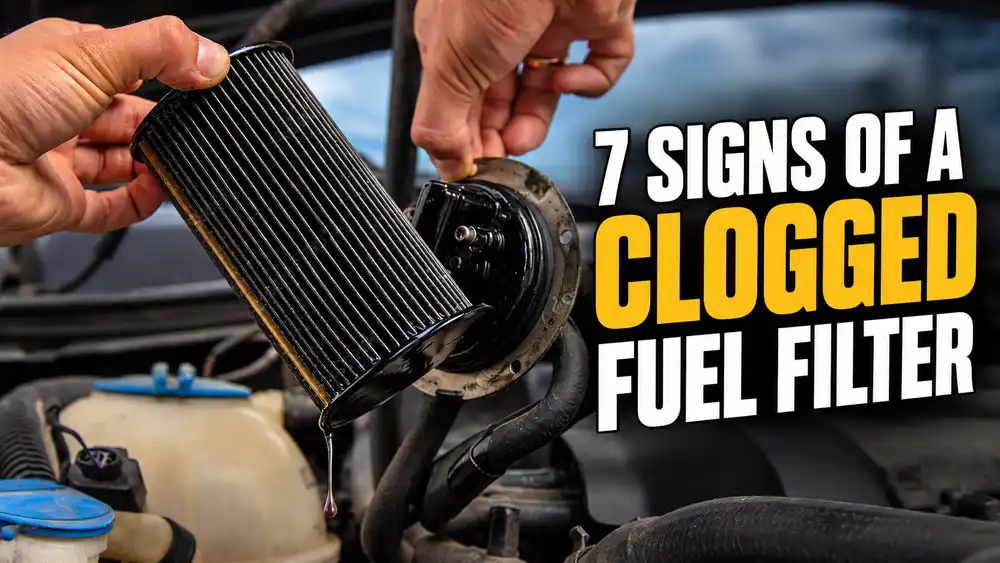
When you start up your excavator as usual to begin your workday, you suddenly hear an unusual noise coming from the engine, notice that the RPM is unstable, or even experience occasional stalling. Are you worried that the entire fuel system has suffered serious damage? This situation occurs frequently among our customers. Based on our technicians’ experience, if there are no leaks or obvious damage to the fuel lines, the problem is most likely a clogged fuel filter.
In the early stages, a clogged fuel filter is often difficult to detect. However, over time, restricted fuel flow can severely impact engine performance and even cause long-term damage. Therefore, it is crucial to identify the signs of a faulty filter as early as possible.
This guide applies to diesel excavators, loaders, tractors, generators, and other heavy equipment. It covers the low-pressure supply side of the fuel system. Never loosen a common-rail pipe to test fuel flow.
Safety note: High-pressure common-rail fuel can penetrate skin. Shut the engine down and follow the lockout procedure before opening the fuel system. Perkins says some systems need at least 60 seconds for pressure to fall. Check the engine manual because some systems need up to 10 minutes.
Why Do Fuel Filters Clog?
Unlike passenger cars, which rely on clean, high-quality fuel, heavy equipment often uses lower-quality or contaminated diesel to reduce operating costs. While this may seem economical in the short term, it increases the risk of contaminants entering the system, especially when operating in harsh environments such as construction sites, farms, or quarries. Under these conditions, the fuel filter becomes the engine’s most critical line of defense.
Fuel filters in heavy equipment can become clogged due to a variety of common issues. During refueling, dust and debris from dirty fuel nozzles or the worksite can enter the fuel tank. Water contamination—resulting from condensation inside the tank or improper fuel storage—can foster microbial growth, forming a viscous diesel sludge that rapidly clogs the filter. Rust particles resulting from an aging fuel tank can also exacerbate this problem. As contaminants continue to accumulate, the filter becomes saturated, restricting fuel flow and causing engine failure. Early identification of these causes can help prevent serious damage and save at least $100 in repair costs.
7 Signs Fuel Flow Is Restricted at the Filter
Treat each symptom as a clue, not a verdict. Other supply faults can produce a similar result. These include a blocked tank vent, damaged pickup, air leak, weak lift pump, gelled fuel, and pinched hose.
1. Loses Power Only Under Load
The engine may sound normal at idle because idle requires little fuel. The restriction becomes clear during digging, lifting, travel, or a generator load step. Engine speed falls, and the machine recovers when the operator reduces the load.
This load-dependent pattern is one of the strongest clogged diesel fuel filter symptoms. Check air intake restriction and engine derate codes at the same time. Low boost, high coolant temperature, and an active aftertreatment fault can also limit power.
2. Starting Takes Longer Than Usual
A restricted filter can delay pressure buildup during cranking. The engine may need several attempts before it starts. The symptom often becomes worse after the machine sits or after a filter service.
Long cranking after service also points to trapped air, a loose seal, an incorrect filter, or a faulty hand primer. Use the manual’s priming method before calling the new filter defective.
3. Engine Speed Hunts as Fuel Demand Rises
The engine may surge, hesitate, or run unevenly when the operator raises speed. Fuel delivery falls behind demand, then catches up as the governor or electronic control reacts. The cycle can repeat under a steady load.
Air entering the suction line can create the same behavior. Look for bubbles in an approved clear test line, wet fittings, damaged hoses, and loose filter seals. Do not replace the filter and ignore an air leak.
4. The Engine Stalls During Work but Restarts Later
A machine may run for several minutes, stall under a heavy task, and restart after a short wait. Low demand during cranking can let the filter bowl refill enough for another brief run. The same pattern can occur when a blocked tank vent creates vacuum in the tank.
Check the vent, tank pickup, and supply hose before fitting a fuel pump. Record filter restriction or supply pressure while the fault is present. A test after the engine recovers may miss the cause.
5. A Restriction Indicator Moves Toward Its Service Zone
Some primary filter heads use a vacuum indicator. The indicator records the highest restriction reached during operation. A reading that rises far above the clean-filter baseline gives stronger evidence than engine feel alone.
Racor states that many pumps have trouble drawing fuel at 7–10 inHg, while some fail earlier or later. Use that range only as a Racor suction-side example. Follow the machine specification, indicator instructions, and the baseline recorded with a clean filter.
6. Low-Side Pressure Drops During a Loaded Test
Many engines provide a test port on the low-pressure circuit. Connect the specified gauge and compare pressure before and after the filter if the service procedure allows it. A large pressure loss across the filter under load points to restriction in the element or filter head.
Do not use one pressure target for every engine. Mechanical pumps, electric lift pumps, and common-rail supply modules work at different pressures. Test at the speed, load, temperature, and port listed in the service manual.
7. The Bowl or Removed Filter Shows a Contamination Source
Water, rust, dark slime, sediment, or wax crystals in a clear bowl show why fuel flow may be restricted. A filter that plugs again within a few hours usually points upstream. The tank, transfer container, storage tank, pickup screen, or cold-weather fuel may be feeding the problem.
Visible contamination supports the diagnosis, but a clean-looking bowl does not clear the filter. Fine material can load the media without forming an obvious layer. Save a fuel sample before draining the bowl if repeated clogging needs lab testing.

Prove the Restriction Before Replacing Parts
Begin with the service history. Record the filter hours, fuel source, refueling date, and ambient temperature. Note recent tank work and repairs that opened the fuel system. Check whether the correct primary and secondary filters are installed.
Then reproduce the fault safely. Monitor restriction, low-side pressure, and actual versus commanded rail pressure during the operating condition that causes the complaint. Stop the test if a leak, unsafe pressure, or severe engine fault appears.
Use this sequence:
- Inspect the tank level, cap vent, visible hoses, filter seals, drain, and water-separator bowl.
- Read active and stored fault codes before clearing anything.
- Record the clean-filter restriction or low-side pressure at idle and at the manual’s test condition.
- Repeat the measurement when the machine loses power.
- Replace the filter only when the evidence or maintenance schedule supports it.
- Prime the system by the engine maker’s method and repeat the same loaded test.
If the symptom disappears and the measured supply value returns to its clean-filter baseline, the removed filter was restricting flow. If the reading stays abnormal, continue upstream to the tank and downstream to the lift pump. Do not keep installing filters to hide an unresolved fuel problem.

Separate Filter Restriction From Other Supply Faults
The location and timing of the pressure change matter. A gauge reading before the filter, after the filter, and at the lift-pump outlet can narrow the fault. Use only the ports and adapters approved for the engine.
| Evidence during the complaint | More likely cause | Check next |
|---|---|---|
| Vacuum rises after the filter and returns near baseline with a new element | Restricted filter element | Inspect the removed filter and fuel source |
| Vacuum remains high with the filter bypassed only by an approved test setup | Tank vent, pickup, shutoff valve, or supply hose restriction | Test the cap vent, pickup flow, valve position, and hose condition |
| Supply pressure remains low with a known-good filter and clear inlet path | Weak lift pump, low voltage, or pump control fault | Test pump power, ground, current, and outlet pressure |
| Air bubbles appear before the pump | Suction-side air leak or low tank level | Inspect seals, drain valve, fittings, hose, and pickup tube |
| Fuel clouds or forms wax crystals in cold weather | Fuel waxing or wrong seasonal fuel | Warm a sample safely and follow the fuel supplier’s cold-flow guidance |
| Rail pressure falls but low-side supply meets specification | High-pressure pump, pressure control, excessive injector return, or sensor fault | Follow the engine maker’s high-pressure diagnostic procedure |
This comparison prevents an expensive mistake. A new high-pressure pump will not correct a blocked tank pickup. A new filter will not seal a cracked suction hose.
Read the Removed Filter Without a Blow Test
Do not blow through a used filter to judge restriction. The result is not calibrated. Shop air can move dirt through the media or expose the technician to fuel mist. Never reinstall a used filter after this test.
Drain the filter into a clean container. Check the fuel for water separation, sediment, rust, dark biological material, or wax. If the shop has the correct filter cutter and inspection procedure, open the element without adding metal or dirt.
Keep the inlet and outlet samples separate when possible. A lab can test repeated contamination for water, particle count, or microbial growth. The result may change the repair from a filter replacement to tank and fuel-handling cleanup.
Install the New Filter Without Contaminating It
Modern common-rail systems are sensitive to dirt and water. Perkins links contaminated fuel with hard starting, low power, injection-component wear, and more frequent filter service. Clean work matters as much as the filter brand.
Clean the filter head and surrounding area before removal. Cap open lines, replace damaged seals, and lubricate the new seal only as directed. Do not fill a clean-side filter opening with unfiltered fuel unless the engine manual gives an approved method.
Prime the low-pressure side with the hand primer, electric pump, or scan-tool routine specified for that engine. Never crack a high-pressure injector line to bleed a common-rail system. After starting, inspect for leaks and confirm that the original loaded symptom and pressure fault are gone.
The service interval also comes from the machine or engine manual. Perkins states that maintenance schedules vary by engine and operating condition. Its guidance also calls for shorter intervals in dusty or adverse work and regular water-separator checks.
For labor and maintenance planning, use the separate guide to diesel fuel-filter service cost. Cost does not determine whether the current filter is clogged; the loaded test does.
How often should the fuel filter be replaced?
There is no one-size-fits-all answer; the replacement interval depends on the equipment manufacturer, operating conditions, and fuel quality.
- Consult the operator’s manual: This is the most important step. The manual will clearly specify the recommended replacement interval (typically measured in operating hours).
- Standard Interval: For most modern heavy equipment, the standard practice is to replace the fuel filter every 300 to 500 operating hours, usually in conjunction with an engine oil change. Some manufacturers may recommend replacing the primary filter/fuel-water separator every 250 hours.
- Adjust Based on Operating Conditions: If you are operating in a dusty environment or know that the fuel quality is poor, you should shorten the replacement interval. It is better to replace the filter early than to delay it.
Conclusion
Although fuel filters may seem unremarkable—being small and inexpensive—they play a crucial role in the health and operational performance of heavy machinery. The various symptoms caused by a clogged fuel filter—ranging from a loss of power to difficulty starting—are actually distress signals from the engine. Ignoring these signs will directly lead to reduced productivity, unexpected downtime, and may even cause catastrophic damage to the fuel system. Performing regular preventive replacements is one of the wisest and most cost-effective maintenance measures you can take.
If you’re facing issues with a clogged fuel filter, AmoParts offers the ideal solution. We supply high-quality, affordable fuel filters compatible with leading brands such as Caterpillar, Komatsu, and John Deere, helping you get back to work quickly.


