
6 Warning Signs of Rod Bearing Failure in Diesel Engines

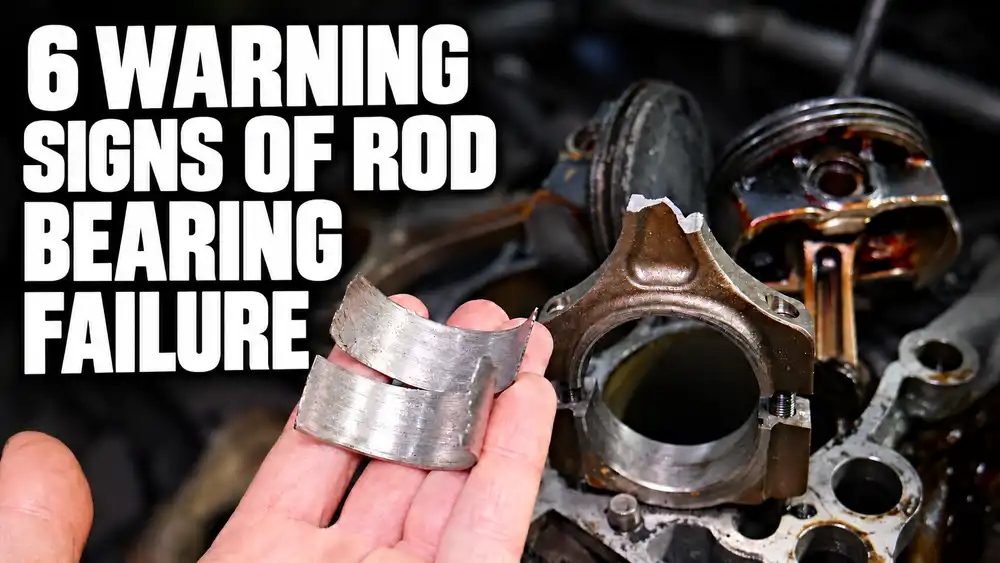
A diesel engine emits a dull knocking sound after warming up. This sound becomes sharper when the operator applies a load to the hydraulic system or when the vehicle is climbing a hill. This phenomenon warrants immediate attention, but it does not necessarily indicate a connecting rod bearing failure.
Symptoms of connecting rod bearing failure include knocking sounds under load and low oil pressure when the engine is warm; metal debris may also be present in the oil filter. These signs apply to engines in diesel excavators, loaders, tractors, trucks, and generator sets.
Please analyze these clues comprehensively, as many other components can also produce noise, such as fuel injectors, piston pins, main bearings, accessory drive systems, and the flywheel.
Stop-work warning: Shut the engine down if a new heavy knock appears with low oil pressure, metal debris, or rising oil temperature. Do not keep running the machine. A damaged bearing can turn in the connecting rod. It can then ruin the crankshaft journal and send debris through the oil system.
What happens when a connecting rod bearing fails?
The connecting rod bearing is located between the large end of the connecting rod and the crankshaft journal. It is a replaceable plain bearing (sliding bearing), not a rolling bearing. Under the combined action of engine oil pressure and crankshaft rotation, a thin oil film forms. When the engine is running, this oil film keeps the journal and the bearing surface separated.
MAHLE points out that the proper functioning of engine bearings depends on this oil film. Once the oil film breaks down or the load exceeds its load-bearing limit, the bearing will be damaged. Insufficient oil supply, improper clearance, contamination by impurities, poor installation alignment, fuel dilution, coolant contamination, and severe low-speed, high-load engine operation (i.e., “running in a low gear”) can all destroy this oil film.
Early wear may be limited to the softer surface layer. As operating time increases, the underlying material may be exposed, or metal-to-metal contact may occur on the journal surface (adhesive wear). Consequently, the bearing shell may be damaged by overheating or even become locked in the mounting bore (bearing seizure). Once the connecting rod big-end bore or crankshaft journal becomes deformed, simply replacing the bearing shell will no longer be sufficient to repair the engine.

6 Warning Signs of Rod Bearing Failure
No single symptom can definitively diagnose connecting rod bearing failure. A diagnosis is more reliable when multiple signs point to the same crankshaft journal. Before disassembling the engine, record its current operating conditions and oil temperature, and keep a copy of any warning logs and recent maintenance records.
| Evidence | Why it matters | Next check |
|---|---|---|
| Deep knock that becomes stronger under load | Extra clearance can let the rod and journal change direction with an audible impact | Compare the sound at idle, raised speed, and controlled load |
| Oil pressure falls after the oil becomes hot | Warm oil flows more easily through excessive clearance | Install a mechanical gauge and compare readings with the engine manual |
| Bronze, copper-colored, gray, or silver debris in the filter | Bearing layers or another lubricated component may be shedding material | Open the filter, separate magnetic from nonmagnetic debris, and inspect the oil |
| Copper or lead rises across oil-analysis reports | Bearing or bushing wear becomes one possible source | Compare the trend with previous samples and other metals or contaminants |
| Knock starts after an overhaul or oil-system repair | Wrong clearance, blocked passages, mixed caps, or lack of priming becomes more likely | Review assembly records before running the engine again |
| One cylinder changes the knock during an approved balance test | The load on one connecting rod may affect the sound | Continue with lower-end inspection; do not treat the test as final proof |
A faint tapping sound coming from the upper part of the engine is distinctly different from the dull knocking sound coming from the lower part. Pistons may also produce noise when the engine is cold, but this noise will gradually disappear as the engine warms up.
Noise from connecting rod bearings typically varies with engine speed. This sound may become more pronounced when cylinder pressure loads the crankshaft. However, the specific characteristics of the noise vary depending on the engine type and the extent of damage.
Shut Down the Machine Before a Rod Bearing Spins
Once a connecting rod knocking sound occurs, the operator cannot predict how much longer the engine can continue to run. Bearing clearance may increase gradually, or the bearing may seize without warning due to overheating (causing the bearing to rotate with the shaft). Once a bearing seizure occurs, the bearing may block the oil holes, damage the connecting rod and its cap, and score the crankshaft journal.
If a knocking sound first appears and sounds deep, shut down the engine immediately. If the oil pressure warning light remains on, or if visible metal debris is found in the oil filter, the engine must also be shut down.
The engine must also be shut down in the event of a sudden loss of oil, fuel diluting the oil, or coolant mixing with the oil. If oil pressure drops after the engine overheats, the engine should also be shut down. By comparison, the cost of towing the equipment is far lower than the cost of testing damaged lower engine components under load.
4 Levels Diagnosing Connecting Rod Bearing Failures
First, conduct an inspection that preserves evidence and prevents further damage. The goal is not to confirm the initial hypothesis. Determine whether the engine can be safely tested before deciding on the extent of the repairs.
1. Record When the Rod-Bearing Noise Appears
Note whether the engine is cold or has reached operating temperature. Record the engine speed, load, oil pressure, and any recent warning messages, and note the location where the abnormal noise is most pronounced.
Use a mechanical stethoscope to compare the sounds coming from the oil pan, cylinder block, and gear housing. When inspecting the compressor and accessory drive systems, be sure to stay clear of moving parts.
Electronic cylinder balancing tests or cylinder deactivation tests should only be performed if the engine manufacturer provides relevant procedures. Reducing the combustion load on a single cylinder may alter the characteristics of the connecting rod knock, but this should not be used as the basis for a final diagnosis. Never deactivate a cylinder by loosening the high-pressure common-rail fuel line.
2. Measure Hot Oil Pressure With a Mechanical Gauge
Before connecting the pressure gauge, check the oil level, viscosity grade, and filter model, and look for any signs of fuel or coolant contamination. Install the pressure gauge at the designated test port. Record the pressure values at the oil temperature and engine speed specified in the service manual.
Never blindly apply general rules found online to all diesel engines. Minimum idle pressure, rated speed pressure, test temperature, and sensor mounting locations vary by model. If the mechanical pressure gauge reading is below the specified value, follow the complete low oil pressure test procedure to investigate.
Although low pressure readings are helpful for diagnosis, they cannot directly pinpoint a specific faulty bearing. A worn oil pump or a stuck relief valve can both result in the same reading; a ruptured suction line or a clogged filter screen can also cause similar conditions.
Thinned oil, worn main bearings, and excessive clearances in multiple locations can also lead to a drop in pressure. Even if the pressure test results are within specifications, the possibility of damage to a journal cannot be completely ruled out.
3. Inspect the Oil and Filter Without Losing the Evidence
Before adding new oil, drain the warm engine oil into a clean container and take a sample. Use a specialized filter element cutting tool to open the filter element to avoid generating metal debris that would result from cutting it with a hacksaw. Unfold the pleats of the filter element under bright light and inspect it with a clean magnet for impurities.
Magnetic particles typically indicate the presence of iron or steel wear. Since many bearing materials are not strongly magnetic, bronze, copper, gray, or silver-colored particles are also worth noting. Never rely solely on color to determine which component has failed, as bushings, thrust surfaces, oil coolers, and other components can also produce similar metal debris.
Caterpillar’s oil analysis guidelines focus on monitoring the levels of iron, lead, copper, aluminum, and chromium. Its laboratory also tests for fuel, water, coolant, soot (carbon black), and viscosity. Trends in test results are more important than individual readings; results should be compared with the engine series, oil service life, oil top-off volume, and historical sample data.
Cummins’ maintenance manual notes that elevated copper levels are one of the signs of bearing or bushing wear, and explains that lead is a material found in bearing surface coatings.
The manual also cautions against disassembling the engine based solely on fluid analysis results; instead, it instructs maintenance personnel to inspect the filter element. Fluid analysis is intended to guide subsequent inspections, not to replace them.

4. Inspect the Bearing, Rod, and Crankshaft Together
Before removing the oil pan or connecting rod caps, be sure to follow the instructions in the engine repair manual. Perform the machine locking procedure, properly support the removed components, mark the installation positions of each connecting rod cap and connecting rod, and store matching parts in pairs. Some connecting rod bolts are single-use fasteners; re-tightening them is strictly prohibited.
Inspect both bearing shells and their back surfaces. Inspect the connecting rod bores, connecting rod cap mating surfaces, oil holes, and crankshaft journals. Use calibrated gauges to measure journal dimensions, taper, and roundness deviations. Measure the connecting rod bores (in the assembled state) and bearing clearances according to the engine manufacturer’s specified methods.
If permitted by the engine repair manual, Plastigage may be used to check assembly clearances. However, this method cannot detect journal taper, connecting rod bore deformation, or various surface defects. Never substitute general clearance reference tables or empirically estimated tightening torques for the correct specifications outlined in the engine repair manual.
Let the Bearing Surface Point to the Root Cause
A new bearing will fail again if the oil-supply or geometry problem remains. Clean the removed parts and keep their cylinder positions recorded. Then compare the complete damage pattern, not one shiny spot.
- Shiny wiping, smeared metal, or blue-to-black color: Check for oil starvation and tight clearance. Also inspect passages, the pickup, pump, relief valve, and system priming.
- Straight scratches with embedded particles: Trace dirt, abrasive debris, or metal left from an earlier failure. Inspect the crankshaft and clean the full oil circuit.
- Heavy wear at one edge or on diagonal areas: Measure the rod for bend or twist. Check journal and bore alignment. A new shell cannot correct a bent rod.
- Damage on the back of the shell or movement at the locating tang: Check the rod bore and bearing crush. Also check cap fit, mixed caps, and the bolt procedure.
- Pitting, flaking, or fatigue across the loaded zone: Check overload, lugging, and detonation where it applies. Then check surface finish, clearance, and oil-film strength.
MAHLE’s engine-bearing failure guide shows how oil-starved shells change. They can become shiny, smeared, scratched, and then dark blue or black. The guide also calls for checks of the oil passages, screen, filter, pump, and relief valve. It covers bearing choice and oil-system priming as well.
The number of damaged bearings also matters. One damaged location can point to a blocked feed, bent part, or assembly error. Similar damage across many rod and main bearings has a different meaning. It points more strongly to poor oil supply, bad oil, or dirt in the system.
Decide Whether Bearing Service Is Still Enough
Repairs involving only the replacement of main bearings have limited applicability. The crankshaft journals must meet the engine manufacturer’s specified limits for dimensions, taper, shape, surface finish, and extent of thermal damage. The connecting rod big-end bore must maintain its roundness. The bearing caps must fit properly, and the oil passages must remain clean.
If a main bearing seizes (bearing seizure), it is usually necessary to rebuild the crankshaft or perform a more comprehensive engine overhaul. Crankshaft journals with scoring or discoloration due to heat can also lead to an expanded scope of repair. Out-of-round connecting rod bores, misaligned bearing caps, or metal debris scattered throughout the engine similarly require an expanded scope of repair.
Be sure to inspect the main bearings, oil pump, and piston cooling nozzles. If the engine design includes these components, also inspect the turbocharger oil circuit, camshaft bearings, and oil cooler.
Never order standard-size main bearings simply because the old ones appear to be standard size. The crankshaft may have been ground down to a smaller size during a previous repair, causing the actual dimensions of the existing journal to no longer match the installed main bearings.
Verify the engine serial number and crankshaft part number. Also record the machined journal dimensions, bearing grades (or reduced-size specifications), and relevant connecting rod parameters.
If the inspection reveals issues affecting multiple journals, review the components included in the engine overhaul kit before determining the scope of repairs. Overhaul kits typically cover common wear parts, but you must still measure the crankshaft, connecting rods, cylinder block, and cylinder liners.
Prevent the Second Rod-Bearing Failure
The failed shell is evidence, not the original cause. Record its position and wear pattern before discarding it. Correct the condition that removed the oil film or overloaded the bearing.
- Use the oil grade and change interval listed for the engine and duty cycle.
- Repair fuel dilution, coolant entry, overheating, low oil level, and pickup leaks before assembly.
- Clean oil passages, the pan, pickup, cooler, and reusable lines after a metal-producing failure.
- Verify journal finish, rod-bore geometry, bearing size, installed clearance, and fastener procedure.
- Prime the lubrication system before the first start and confirm pressure immediately.
- Avoid sustained lugging and loads outside the engine or machine rating.
- Trend oil-analysis results with oil hours and makeup oil instead of reacting to one metal number.
Protect the Crankshaft Before the Knock Gets Worse
Connecting rod bearing failure can take a heavy toll on your engine and your wallet; however, with proper routine maintenance and prompt action when warning signs appear, you can avoid the worst-case scenario. Remember, high-quality parts are essential for ensuring the reliability and longevity of your equipment.
At Amoparts, we understand just how important reliable parts are for your equipment. That’s why we offer high-quality engine parts that are both reasonably priced and fully compatible. Whether you’re performing preventive maintenance or addressing an existing issue, choosing high-quality parts is always the most cost-effective choice in the long run.
Never wait until you hear that alarming knocking sound before taking action. Develop and follow a regular maintenance schedule, watch for warning signs, and use high-quality replacement parts to ensure your equipment runs smoothly for years to come. Your engine—and your wallet—will thank you for it.
If you’re looking for a specific engine part or have any questions about your equipment’s connecting rod bearings, the Amoparts team is here to help. With over 70,000 top-quality aftermarket parts in stock, we can quickly provide you with what you need at a reasonable price.


