9 Common Symptoms of Fuel Injector Issues

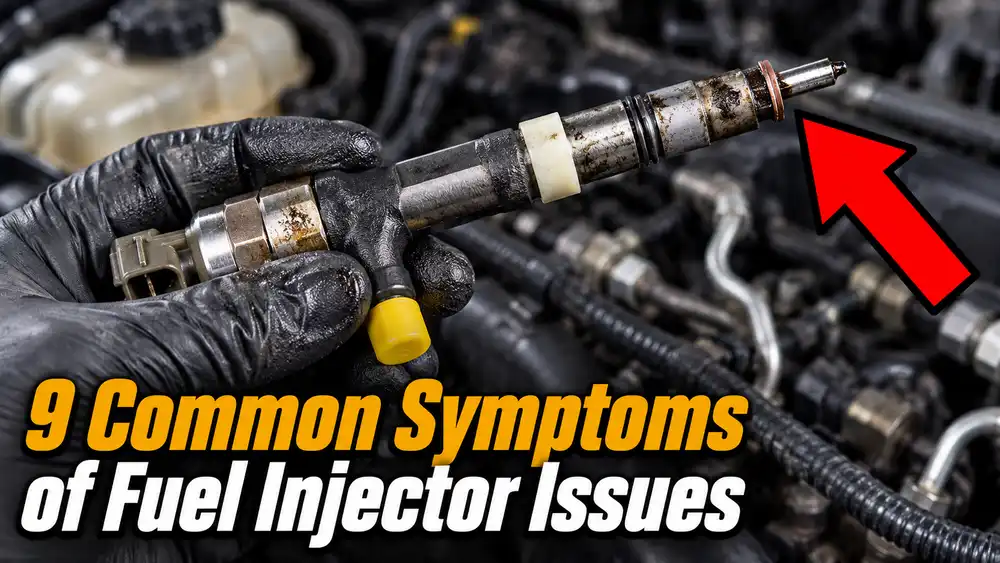
Fuel injectors and nozzles are among the most precision-engineered components in a diesel engine. They control the timing, volume, and atomization of fuel entering the combustion chamber.
When these components are functioning properly, the engine starts smoothly, idles steadily, delivers consistent power, and achieves high fuel efficiency. If an injector becomes clogged, worn, damaged, or experiences an electrical malfunction, the equipment may exhibit problems such as difficulty starting, excessive smoke, reduced power, or increased fuel consumption.
This guide will cover nine common problems with fuel injectors and nozzles in heavy equipment, the potential failures they may indicate, and a list of inspection items to perform before replacing an injector.
What are the Functions of Fuel Injectors and Nozzles?
A fuel injector is a precision-controlled component responsible for delivering diesel fuel to the engine’s combustion chamber. Depending on the engine design, it can be driven mechanically, hydraulically, or electronically.
The nozzle is located at the tip of the fuel injector, and its tiny orifice determines the direction and pattern of the fuel spray. The nozzle must atomize the fuel into extremely fine droplets to ensure it mixes thoroughly with compressed air and burns efficiently.
The fuel injector controls the injection timing and fuel volume, while the nozzle controls the atomization and spray pattern. Even trace amounts of contaminants, internal wear, carbon deposits, or leaks can affect engine performance.
For more information on common-rail diesel injection technology, please refer to the Bosch Common-Rail Injection System Overview.
9 Common Symptoms of Fuel Injector Issues
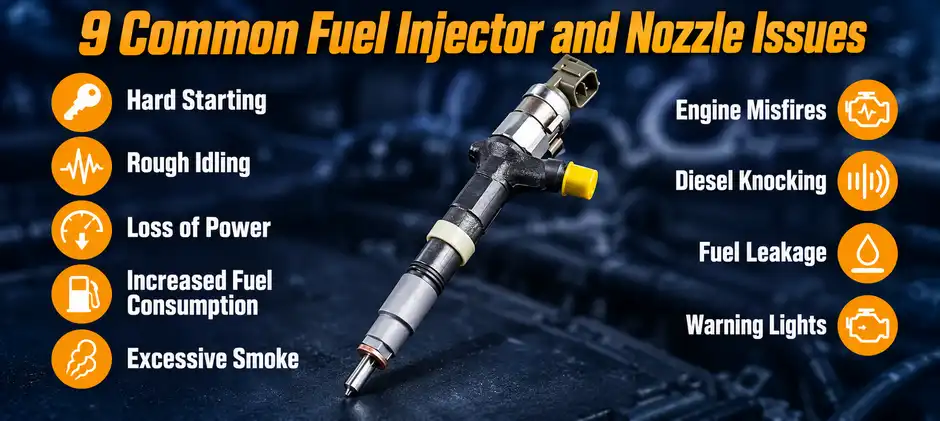
The table below provides a brief overview of the nine most common problems with fuel injectors and nozzles.
| Issue | What It May Indicate | What to Check First |
|---|---|---|
| 1. Hard starting | Restricted, leaking, or worn injector | Fuel filter, air in fuel, fuel pressure, battery, and compression |
| 2. Rough idling | Uneven fuel delivery or cylinder imbalance | Injector balance, return flow, wiring, and compression |
| 3. Loss of power | Insufficient fuel delivery under load | Fuel filters, supply pressure, rail pressure, and air intake |
| 4. Increased fuel consumption | Leaking injector or poor fuel atomization | Injector leakage, exhaust smoke, and operating conditions |
| 5. Excessive smoke | Incorrect fuel quantity or spray pattern | Injector operation, air intake, timing, and compression |
| 6. Engine misfires | Stuck, restricted, leaking, or electrically faulty injector | Fault codes, wiring, injector balance, and compression |
| 7. Diesel knocking | Incorrect timing, overfueling, or poor atomization | Fuel quality, injector balance, timing, and engine condition |
| 8. Fuel leakage | Damaged seal, loose connection, or cracked component | Injector body, sealing washer, return line, and connections |
| 9. Warning lights | Injector circuit, rail-pressure, or cylinder-balance fault | Fault codes, wiring, fuel pressure, sensors, and connectors |
1. Hard Starting
Worn, clogged, or leaking fuel injectors may fail to deliver the proper amount of fuel during startup (when the crankshaft is turning). This can result in prolonged engine startup times, the need for repeated starting attempts, or particular difficulty during cold starts.
Difficulty starting does not necessarily indicate a faulty fuel injector. Issues such as insufficient fuel pressure, air in the fuel system, a weak battery, poor cylinder compression, a faulty glow plug, or incorrect sensor signals can also cause similar symptoms.
2. Rough or Unstable Idling
If one cylinder receives more or less fuel than the others, the engine may shake, surge, or idle unevenly. A sticking injector, incorrect spray pattern, internal leakage, or electrical fault may cause this cylinder imbalance.
A cylinder balance test, injector return-flow test, and electrical inspection can help identify the affected cylinder.
3. Loss of Engine Power
A restricted nozzle or weak injector may not supply enough fuel when the engine is under load. The excavator, loader, bulldozer, or other machine may feel slow and struggle during digging, lifting, pushing, or travel.
Before replacing an injector, check the fuel filters, low-pressure fuel supply, common-rail pressure, air filter, and turbocharger condition.
4. Increased Fuel Consumption
An injector that leaks, dribbles, or delivers too much fuel can reduce combustion efficiency and increase operating costs. A damaged nozzle may also produce an uneven spray pattern that prevents the fuel from mixing correctly with the air.
Compare current fuel consumption with previous operating records and check for smoke, injector imbalance, or excessive injector return flow.
5. Excessive Exhaust Smoke
Injector and nozzle faults can affect fuel quantity and atomization, resulting in abnormal exhaust smoke:
- Black smoke: May indicate excessive fuel, insufficient air, poor atomization, or excessive engine load.
- White smoke: May indicate unburned fuel, poor compression, low cylinder temperature, or incorrect timing.
- Blue smoke: Usually indicates lubricating oil entering the combustion chamber and may not be related to the injector.
Smoke color alone cannot confirm injector failure. The air-intake system, turbocharger, injection timing, compression, and fuel pressure must also be checked.
6. Engine Misfires
An injector that is electrically faulty, mechanically stuck, restricted, or leaking may cause one or more cylinders to misfire. The engine may vibrate, run unevenly, lose power, or produce an abnormal exhaust sound.
Damaged wiring, connector corrosion, low compression, valve problems, or incorrect fuel pressure may produce similar symptoms.
7. Diesel Knocking or Unusual Noise
Incorrect injection timing, excessive fuel delivery, poor atomization, or cylinder imbalance may produce a sharp diesel knock. A nozzle that dribbles instead of producing a fine spray can change the combustion process and increase engine noise.
Stop operating the engine if the noise is severe. Mechanical engine damage, low oil pressure, poor-quality fuel, or incorrect valve clearance should also be ruled out.
8. Fuel Leakage
Diesel fuel around the injector, high-pressure line, return connection, or injector seat may indicate a damaged seal, loose connection, cracked component, or internal injector problem.
Black carbon deposits around the injector base may indicate combustion leakage past the injector sealing washer.
Never use your hand to search for a high-pressure fuel leak. High-pressure diesel fuel can penetrate the skin and cause a serious medical emergency.
9. Engine Warning Lights or Fault Codes
Electronically controlled engines may record fault codes related to the injector circuit, cylinder balance, rail pressure, fuel-pressure control, or combustion quality.
A fault code does not always mean the injector itself has failed. The cause may be damaged wiring, a poor connection, incorrect fuel pressure, a sensor fault, or an engine control problem.
What Causes Injector and Nozzle Issues?
| Cause | How It Affects the Injector |
|---|---|
| Fuel contamination | Dirt and abrasive particles damage precision surfaces and may cause sticking, leakage, or an incorrect spray pattern. |
| Water in the fuel | Reduces lubrication and may cause corrosion or seizure of internal components. |
| Clogged fuel filter | Restricts fuel flow and may produce symptoms similar to injector failure. |
| Carbon deposits | Partially block nozzle holes and distort the fuel spray. |
| Incorrect fuel | May reduce lubrication, create deposits, or damage sensitive components. |
| Electrical faults | May prevent electronic injectors from opening or closing correctly. |
| Incorrect installation | May cause leakage, calibration errors, or premature failure. |
| Normal wear | High pressure and repeated operating cycles eventually wear internal components. |
A restricted fuel filter can imitate several injector faults. If the machine is difficult to start, loses power, or stalls under load, review these 7 symptoms of a clogged fuel filter before replacing an injector.
How Are Injector Issues Diagnosed?
Engine symptoms alone cannot confirm injector failure. Low compression, restricted airflow, fuel-supply problems, sensor faults, injection-pump problems, and incorrect valve adjustment may produce similar symptoms.
A proper diagnosis may include:
- Reading and recording diagnostic trouble codes
- Inspecting fuel quality and fuel filters
- Checking for water or air in the fuel system
- Testing the low-pressure fuel supply
- Checking common-rail pressure
- Performing a cylinder balance or cutout test
- Measuring injector return or leak-off flow
- Inspecting injector wiring and connectors
- Performing an engine compression test
- Testing injectors on approved calibration equipment
Use the diagnostic procedure for the exact engine model. Replacing injectors without confirming the cause can be expensive and may not solve the original problem.
Should the Injector Be Cleaned or Replaced?
Some external or internal deposits can be removed through professional cleaning. However, cleaning cannot repair worn precision surfaces, failed electrical components, cracks, excessive internal leakage, or severely damaged nozzle openings.
Professional remanufacturing may be possible when the injector can be disassembled, inspected, rebuilt with approved components, calibrated, and tested to the correct specification.
The injector will normally require replacement when it has:
- A cracked injector body or nozzle
- A failed solenoid or piezo actuator that cannot be serviced
- Excessive internal wear or leakage
- Severely eroded nozzle openings
- An incorrect spray pattern that remains after cleaning
- Damage that prevents correct calibration
The injector should be professionally tested before deciding whether it needs cleaning, rebuilding, or replacement
New vs. Remanufactured Injectors
Both new and professionally remanufactured injectors may be suitable when they meet the correct specifications.
A properly remanufactured injector should be completely disassembled, cleaned, and inspected. Worn components should be replaced, and the completed injector should be tested for fuel flow, leakage, pressure, and spray performance.
Avoid injectors with an unknown test history or incomplete part-number information. An incorrectly calibrated injector may cause poor performance or engine damage even if it physically fits.
How to Prevent Fuel Injector Failures?
Preventive maintenance is the best way to stay one step ahead and avoid fuel injector failures. Please follow these steps to extend the service life of your fuel system:
- Run the equipment regularly: Prolonged periods of inactivity can cause fuel to stagnate in the fuel rail and injectors, leading to the formation of gummy deposits inside the injectors. Be sure to run the equipment at least once a week to keep the fuel flowing.
- Maintain an adequate fuel level: Never let the fuel tank run completely empty. Operating with an extremely low fuel level stirs up sediment and moisture at the bottom of the tank, which can quickly clog the fuel injectors. Keep the tank full to minimize condensation in the air space above the fuel level.
- Replace the fuel filter on schedule: The fuel filter is the system’s first line of defense. Replace the fuel filter strictly according to the manufacturer’s recommended schedule (shorter intervals are recommended in dusty environments) to prevent contaminants from entering the injector nozzles.
- Use high-quality diesel fuel: Purchase fuel from a reputable supplier. Poor-quality or contaminated diesel fuel can produce deposits that, when exposed to high temperatures, adhere to and solidify on the tip of the injector nozzle, disrupting the spray pattern. If storing fuel on-site, periodically check the fuel tank for water accumulation.
- Repair leaks promptly: If moisture or dampness is detected around the fuel injector, replace the seals immediately. Replacing an O-ring is inexpensive, whereas replacing a seized fuel injector or a wiring harness damaged by fire is costly.
Conclusion
Common symptoms of fuel injector failure in off-road machinery include: difficulty starting, erratic idle, misfires under load, loss of power, abnormal exhaust smoke, a strange fuel odor, and increased fuel consumption. Since these symptoms may also be caused by issues with upstream pressure or contaminants, it is necessary to diagnose the entire fuel system and properly repair any leaks. With AmoParts, we can source affordable, high-quality aftermarket parts from their well-stocked and widely compatible product line, thereby reducing downtime and ensuring the equipment continues to operate efficiently.


