
Diesel Cylinder Head Problems: Symptoms, Causes & Replacement Guide

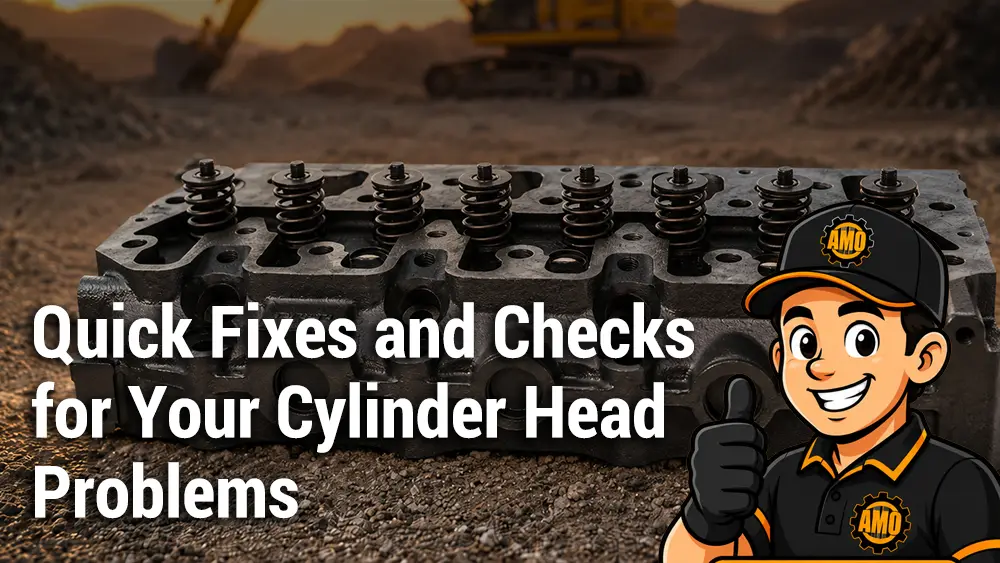
When a diesel engine starts overheating, losing coolant, or blowing white smoke, the head gasket usually gets blamed first. That is understandable, but in the workshop it is not always the gasket. A cracked cylinder head, a loose injector sleeve, a warped sealing surface, or corrosion around a coolant passage can give almost the same signs.
The safest way is not to pull the head immediately. First, read the symptoms, pressure-test the cooling system, look for combustion gas in the coolant, and then decide whether the head can still be machined or whether replacement is the better choice.
What the Cylinder Head Does
The cylinder head sits on top of the engine block and seals the combustion chamber together with the head gasket. It also carries important engine parts: intake and exhaust valves, valve seats, injector bores or pre-combustion chambers on some engines, coolant passages, oil passages, and sometimes camshaft components.
In a diesel engine, the cylinder head works under heat, combustion pressure, coolant pressure, and clamping force at the same time. That is why a small cooling system problem can become a cylinder head engine problem if the machine keeps working while hot.
7 Common Symptoms of a Bad Cylinder Head

The table below is not meant to replace testing. It is only a quick way to decide where to look first, because the same symptom can come from more than one failure.
| Symptom | Possible Cylinder Head Related Cause | What To Check Next |
|---|---|---|
| White smoke from exhaust | Coolant entering combustion chamber | Coolant loss, pressure test, cylinder inspection |
| Bubbles in radiator or coolant tank | Combustion gas entering coolant | Block test, pressure test, overheating history |
| Milky engine oil | Coolant entering oil system | Oil level, cooler condition, head gasket, cracked head |
| Repeated overheating | Warped head, gasket leak, blocked cooling passage | Radiator, fan, thermostat, water pump, head flatness |
| Loss of compression | Valve leakage, head gasket failure, cracked head | Compression or leak-down test |
| Coolant loss with no external leak | Internal leak through gasket or crack | Pressure test, exhaust smoke, cylinder inspection |
| Hard starting after sitting | Coolant leaking into one cylinder | Remove injector/glow plug if applicable and inspect cylinder |
Tip: If the engine has overheated severely, always check both the cylinder head and gasket. A damaged gasket may just be a consequence, not the original cause.
Cylinder Head Problems We See on Heavy Equipment
Most cylinder head failures are not random. They usually start with heat, pressure, poor sealing, or contamination.
1. Overheating
Most warped diesel heads start with heat, not with the head itself. A blocked radiator, weak fan, low coolant level, or thermostat that sticks halfway open can run the engine just hot enough to hurt the head without looking dramatic at first.
In the field, this often starts as a small cooling problem: dust packed into the radiator, a fan that does not pull enough air, or coolant that has not been maintained. Keep working the machine like that and the head surface can move before the operator sees a major failure.
2. Head Gasket Failure
The head gasket seals combustion pressure, coolant, and oil between the engine block and cylinder head. Heat and cylinder pressure work against that joint every time the engine is loaded.
When the gasket fails, combustion gas can enter the coolant, coolant can enter a cylinder, or oil and coolant can mix. The mistake is treating the gasket as the whole problem. If the engine overheated first, the head may already be warped.
3. Uneven Bolt Torque Or Reused Fasteners
A cylinder head needs even clamping force. Wrong torque sequence, dirty bolt holes, stretched bolts, or reused torque-to-yield bolts can create uneven sealing pressure.
This is easy to miss after a repair. The engine may run fine at first, then push coolant or lose compression after a few heat cycles. When that happens, the problem may be assembly practice, not a defective replacement part.
4. Cracks Around Valve Seats Or Injector Bores
Diesel cylinder heads often crack near exhaust valve seats, injector bores, pre-combustion chambers, or coolant passages. These areas see high heat and repeated thermal cycling.
A small crack may not show much when the engine is cold. It can open when the engine reaches working temperature, which is why some machines pass a quick idle test and then start pushing coolant after digging, hauling, or running a generator load.
5. Corrosion In Coolant Passages
Old coolant, wrong coolant, mixed coolant types, or plain water can corrode internal passages. Corrosion can eat sealing areas, restrict coolant flow, and create weak spots inside the head.
If the coolant looks rusty, oily, or sludgy, do not only replace the cylinder head. Flush and inspect the cooling system too, or the new head may be fitted onto the same problem that damaged the old one.
6. Valve Seat Or Valve Guide Wear
High hours, poor lubrication, overheating, and dirty air intake can damage valve seats and guides. This can cause compression loss, rough running, hard starting, and exhaust smoke.
Cylinder head repair may work if the casting is good and the damage is limited to seats, guides, or valves. If the head is cracked or badly warped, a machine shop may still be able to make it look usable, but the repair may not hold under load.
7. Detonation, Overfueling, Or Abnormal Combustion
Incorrect injection timing, injector problems, overfueling, or severe carbon buildup can raise combustion temperature and pressure. That extra stress can damage the head gasket, valves, seats, and cylinder head surface.
If a replaced head fails again quickly, look for fuel system or combustion problems instead of blaming the new part first.
How to Check for Cylinder Head Problems Before Taking the Head Off
Before the head comes off, spend a little time proving where the leak is going. A cooling-system pressure test is usually the first step. If the pressure drops but no coolant appears outside the engine, look harder at the cylinders, oil cooler, head gasket area, and possible cracks inside the head.
- Check coolant level and condition.
Look for oil film, rust, sludge, or a sweet exhaust smell near the coolant tank. - Check engine oil.
Milky oil or a rising oil level can point to coolant contamination, but also check oil cooler failures. - Pressure test the cooling system.
If pressure drops with no external leak, suspect an internal leak. - Look for bubbles in the coolant.
Continuous bubbles can indicate combustion gas entering the cooling system. - Run a compression or leak-down test.
This helps separate valve sealing, gasket leakage, and ring problems. - Record overheating history.
A single severe overheat can warp a head; repeated mild overheating can do the same over time.
Tip:Do not skip the cooling system inspection. Replacing an engine cylinder head without fixing a blocked radiator, bad fan clutch, weak water pump, or stuck thermostat can repeat the failure.
Repairing or Replacing a Cylinder Head – As a Technician Would Do
CWhether you repair or replace a cylinder head really depends on where it’s damaged and how severe it is. From years of experience, here’s how we usually decide in the workshop:
| Condition | When Repair May Work | When Replacement Is Safer |
|---|---|---|
| Light surface warpage | If a machine shop can restore the head within spec | If too much material needs removing, replacement saves future hassle |
| Worn valve seats or guides | Usually repairable if the casting is solid | If cracks run through the seat area, better to replace |
| Small external crack | Sometimes fixable depending on location | If the crack reaches combustion chamber or coolant/oil passage, replacement is safer |
| Corroded coolant passage | Minor corrosion can be machined or repaired | If sealing areas are eaten away, replacement avoids repeat failures |
| Burnt or dropped valves | Repair possible if casting intact | If chamber, seat, or piston contact damage is severe, replace to prevent downtime |
| Multiple cracks | Risky to repair; may hold temporarily | Replace the head to avoid recurring issues |

Workshop tip: On excavators, loaders, trucks, or generators, labor time is a huge factor. If the head has to come off again in a few weeks because a repair didn’t hold, the downtime cost can easily exceed the price difference between repair and replacement. Experienced technicians often favor replacement for high-load engines, even if a repair seems possible, to save time and avoid repeat visits.
What To Inspect On The Old Cylinder Head
Once the head is removed, inspect it before ordering parts.
- Combustion chamber cracks
- Valve seat cracks
- Injector bore cracks
- Warped gasket surface
- Pitting around coolant holes
- Corrosion near oil and coolant passages
- Valve guide wear
- Broken bolts or damaged threads
- Gasket fire ring marks
- Signs of coolant washing one cylinder clean
Take photos of the gasket surface, combustion chambers, injector areas, and old part number if visible. These details help match the correct replacement cylinder head.
How to Match The Right Cylinder Head For A Diesel Engine
For replacement parts, do not match the cylinder head by photo only. The same engine family can use different head versions depending on serial number, injector style, valve layout, coolant passage design, and application.
At Amoparts, we ensure every cylinder head we supply is a perfect match by cross-checking engine models, serial numbers, casting details, and clear photographs provided by our customers. With extensive experience delivering parts for brands such as Cummins, Caterpillar, Komatsu, Volvo, Hitachi, Perkins, Kubota, and Yanmar, we offer remote technical support and a 6-month warranty, ensuring you get the right parts the first time, minimizing downtime and avoiding costly mistakes.
Before choosing a replacement, prepare:
- Engine model
- Engine serial number
- Machine model
- Old cylinder head casting number
- Photos of the old head
- Valve and injector configuration
- Gasket type or old gasket photos
- Cooling system failure history
This information reduces fitment mistakes, especially when the same engine family has more than one cylinder head version.
How To Prevent The New Cylinder Head From Failing Again
The new or repaired head will not last if the root cause remains.
Before startup:
- Flush the cooling system
- Check radiator flow and external blockage
- Replace a weak thermostat or water pump
- Inspect fan belt, fan clutch, or hydraulic fan operation
- Use correct coolant mixture
- Clean bolt holes and follow torque sequence
- Use the correct gasket
- Confirm injector and fuel system condition if overheating came from combustion issues
After startup, monitor coolant level, oil condition, exhaust smoke, and temperature under load. A short idle test is not enough for heavy equipment.
Conclusion
Do not treat a failed cylinder head as a single bad part. In many cases, the head is the part that finally shows the damage, while the real cause is still sitting in the cooling system, fuel system, or previous repair work. Fix that cause first, or the replacement head may come back with the same problem.
If you need a replacement cylinder head for diesel engines or excavators, Amoparts can help check aftermarket cylinder head options for multiple engine brands. Use the engine model, serial number, casting number, old head photos, and failure history when checking fitment.
Related reading: If the same engine also shows low oil pressure, bearing noise, or metal in the oil filter, review the oil pump replacement cost and diagnosis guide before deciding whether the problem is only in the cylinder head.
For overheating checks before cylinder head work, this guide on water pump or thermostat failure can also help narrow the cooling-system cause.


