Diesel Fuel Pumps Explained: Types and How They Work

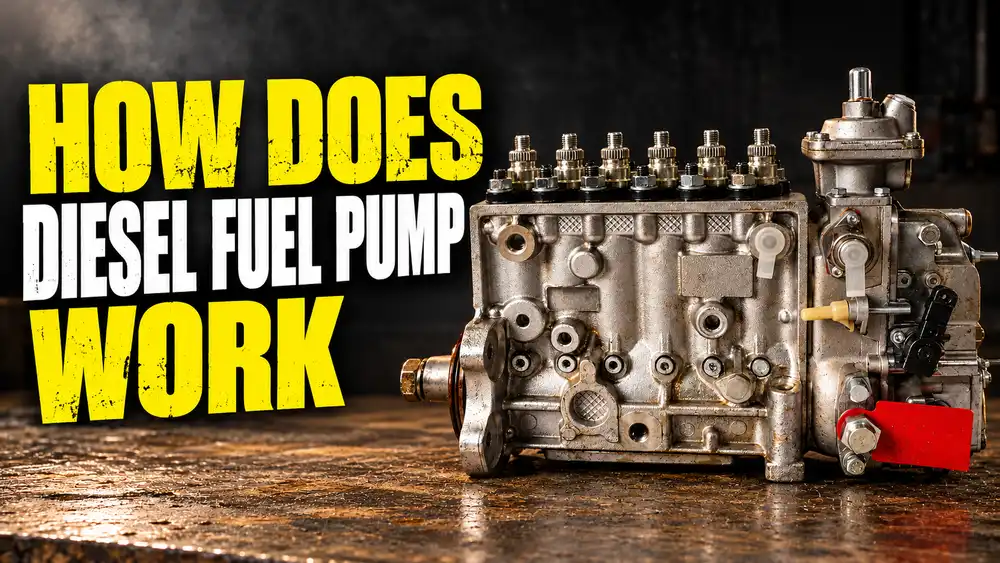
A diesel engine may use more than one fuel pump. One pump moves fuel from the tank. Another pump creates the pressure needed for injection. Calling both parts “the fuel pump” can lead to the wrong test or replacement.
This guide explains the main diesel pump types. It covers excavators, tractors, loaders, generators, and industrial engines. It also shows how fuel moves through the system and what to check before blaming the pump.
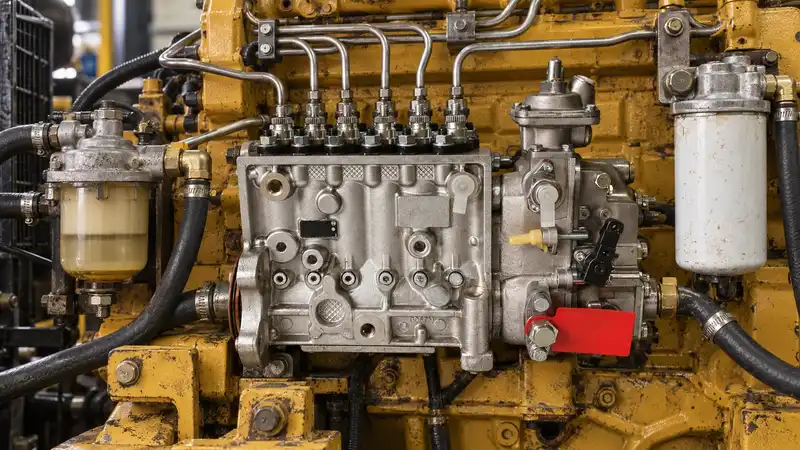
How a Diesel Fuel Pump System Works Step by Step
The fuel system has a low-pressure side and an injection side. The low-pressure side must deliver clean fuel without air. The injection side meters the fuel and sends it to each cylinder at the required time and pressure.
Low-pressure supply
or water separator
or transfer pump
Injection and return
or high-pressure pump
or high-pressure lines
Blue shows the low-pressure supply side. Orange shows pressure generation and injection. Gray shows the return path.
The exact order changes by engine. Some systems place the lift pump before the primary filter. Others build a transfer stage into the main pump. The Perkins fuel-system guide shows why the engine manual must settle the question for a specific machine.
The return circuit also matters. It carries unused fuel and trapped air back to the tank. A pinched return line can change pressure and create symptoms that look like a failed pump or injector.
Main Types of Diesel Fuel Pumps
The words on a quote may not match the service manual. Identify the pump by its job before comparing part numbers.
| Pump type | Main job | Control or drive | Common applications | First checks |
|---|---|---|---|---|
| Lift or transfer pump | Feeds low-pressure fuel to the filters or injection pump | Electric motor, gear, cam-driven diaphragm, or internal stage | Mechanical and common rail systems | Supply pressure and flow, filter restriction, air leaks |
| Inline injection pump | Meters and pressurizes fuel with one pumping element per cylinder | Engine camshaft with a rack, governor, or actuator | Older industrial, agricultural, and heavy-duty diesels | Fuel supply, shutoff, timing, delivery balance |
| Rotary or distributor pump | Meters and distributes fuel to several cylinders through one rotating assembly | Engine-driven with mechanical or electronic control | Older compact tractors, generators, and small industrial engines | Fuel supply, stop control, timing, internal leakage |
| Common rail high-pressure pump | Builds pressure for a shared rail; the injectors control injection events | Engine-driven pump with an ECM-controlled metering valve | Modern excavators, loaders, tractors, and generators | Low-side supply, desired versus actual rail pressure, return flow |
| Unit pump or unit injector | Creates injection pressure for each cylinder | Engine camshaft with mechanical or electronic control | Some medium- and heavy-duty industrial engines | Fuel supply, cam drive, wiring or actuator, cylinder balance |
Common rail pressure depends on the exact system. Cummins common rail data lists pump platforms from 1,800 to 2,600 bar. Bosch CP9 specifications list 1,600 to 2,200 bar for large-engine applications. These figures are product ranges, not a test target for every machine.
Do not order a common rail pump for a unit-injection engine. Confirm the fuel-system family from the engine serial number, service information, and the old component.
Mechanical and Common Rail Pumps Work Differently
A mechanical injection pump creates pressure, meters fuel, and controls injection timing. The pump position and drive timing matter. Some engines use a mechanical governor. Later versions may add electronic actuators.
A common rail pump mainly creates pressure. The rail holds that pressure. Electronic injectors control each injection event. The engine control module decides when and how long each injector opens.
This difference changes the diagnostic process. A mechanical engine often needs supply-pressure, shutoff, timing, and pump-delivery checks. A common rail engine also needs fault codes, desired-versus-actual rail pressure, actuator commands, return flow, and injector leakage data.
Common rail pressure can cause severe injury. Never search for a leak with your hand. Never loosen a high-pressure line on a running engine. A published Cummins safety warning states that high-pressure fuel spray can cause serious injury or death. Follow the shutdown and pressure-release steps for the exact engine.
What Diesel Fuel Pump Symptoms Really Mean
A failing diesel fuel pump can cause several clear operating problems. None of these symptoms proves that the pump has failed.
- Long cranking or no start: The system may lack supply fuel, injection pressure, correct timing, or an enable signal.
- Power loss under load: The pump may not meet demand, but a clogged filter, blocked tank vent, air leak, or restricted pickup can also limit flow.
- Surging or unstable speed: Supply pressure, a governor, a metering valve, an injector, or an electrical connection may be unstable.
- Smoke: Low injection pressure or poor timing can affect combustion. Injector faults, low compression, cold operation, and air-system problems can produce similar smoke.
- Fuel leaks: A wet pump needs inspection, but the leak may start at a hose, fitting, seal, filter head, or return connection.
- Unexpected shutdown: Check stop controls, power supply, fuses, and the tests in Bad Fuel Pump Relay Symptoms before replacing an electric pump.
Start with the easiest upstream checks. Review 7 Signs Your Machine Has a Clogged Diesel Fuel Filter when the engine loses power as load rises. A restricted filter can make a healthy pump look weak.
Why Lift-Pump Supply Changes the Diagnosis
The high-pressure pump cannot correct a poor supply. It needs the specified inlet pressure, flow, temperature, and fuel quality. Air bubbles or inlet restriction can reduce pump fill and disturb rail pressure.
Do not apply one lift-pump pressure value to every engine. Test at the location and operating condition named in the service manual. Compare cranking, idle, and loaded readings when the procedure calls for them.
One published engine example shows how specific the procedure can be. The Cummins CFP9E manual describes a standard 12-volt lift pump. It states that the pump can prime a dry system in 120 seconds or less. That figure belongs to the CFP9E application. It is not a universal priming time.
If pressure falls only under load, inspect the tank vent, pickup tube, hoses, shutoff valves, water separator, and filters. Test the electrical voltage at an electric lift pump while it is working. An unloaded voltage check can miss resistance in the circuit.
Protect the Diesel Fuel Pump From Early Wear
Clean fuel and steady supply protect both the pump and injectors. High-pressure parts use small clearances, so water and hard particles can cause rapid damage.
- Drain the water separator as the machine manual directs.
- Replace filters at the interval or restriction limit in the engine manual. Record service hours, fuel condition, and restriction readings instead of guessing the next change.
- Clean caps, tools, ports, and fittings before opening the system.
- Keep new hoses and pumps sealed until installation.
- Do not run the system dry to test a no-start condition.
- Investigate metal in a filter before installing another pump or injector.
Check the Fuel System Before Replacing the Pump
Use a fixed test order. It prevents a new pump from being installed into the same restriction, air leak, contamination, or electrical fault.
- Confirm the complaint: Record when the problem occurs, including cold start, hot restart, idle, or full load.
- Read codes and live data: On electronic engines, compare commanded and actual rail pressure during the failed condition.
- Inspect the fuel: Check for water, wrong fuel, sludge, microbial growth, and metal.
- Check the low-pressure path: Inspect the tank vent, pickup, valves, hoses, water separator, and filters.
- Measure supply performance: Test lift-pump pressure, vacuum, and flow with the specified tools and test points.
- Check controls: Verify voltage under load, grounds, relays, shutoff solenoids, metering valves, and connectors as applicable.
- Separate pump and injector leakage: Use the engine procedure for return flow, isolation, or bench testing. How to Test a Common Rail Fuel Injector Safely explains why one failed result does not identify every upstream fault.
Stop the diagnosis if you find metal downstream of a high-pressure pump. Identify where the debris traveled before fitting new parts. The repair may require filters, lines, rail components, injectors, tank cleaning, and the correct flushing procedure.
Match the Replacement Pump to the Engine
Two pumps may look alike and still differ inside. The drive, timing, rotation, delivery curve, governor, pressure control, ports, voltage, connector, or calibration can change across an engine family.
Record the engine model, complete serial number, pump number, and machine model. Photograph the tag before removing the old part. Also capture the drive end, ports, connector, and mounting face. Read How To Choose A Fuel Pump when several listings use similar photos.
Also confirm what the quote includes. A bare pump may not include a gear, actuator, solenoid, sensor, gasket, or installation hardware. Review Fuel Pump Replacement Cost separately because this article does not estimate labor or total repair scope.
Keep the Whole Diesel Fuel System in View
Diesel fuel pumps do different jobs. A lift pump supplies fuel, a mechanical injection pump meters and times delivery, and a common rail pump builds pressure for electronic injectors. Test the low-pressure path first, then use the correct engine data to judge the injection side.
A faded tag or mixed cross-reference should not force a guess. Review available fuel pumps by engine application, then request fitment help when the drive, ports, voltage, or serial-number break does not match the old unit.


