
Diesel Lift Pump Failure Symptoms: Tests Before Replacement

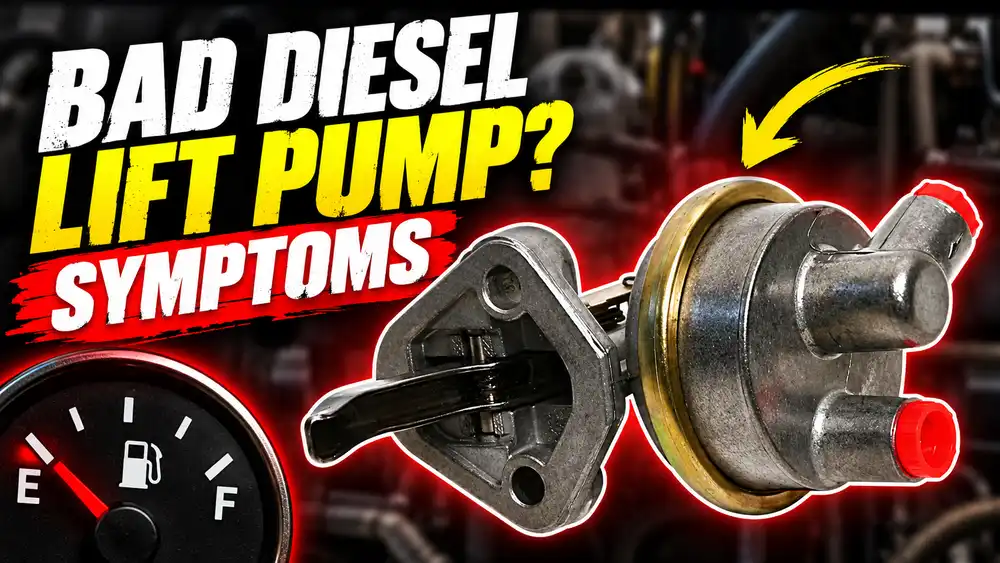
An excavator starts, idles, then loses power as soon as it digs. A weak diesel lift pump could starve the injection system, but a clogged filter or an air leak can do the same thing. These diesel lift pump failure symptoms tell you where to test, not which part to order.
The lift pump belongs to the low-pressure side of the fuel system. This guide shows how to check its supply, power, and output without loosening a high-pressure fuel line.
What Does a Diesel Lift Pump Do?
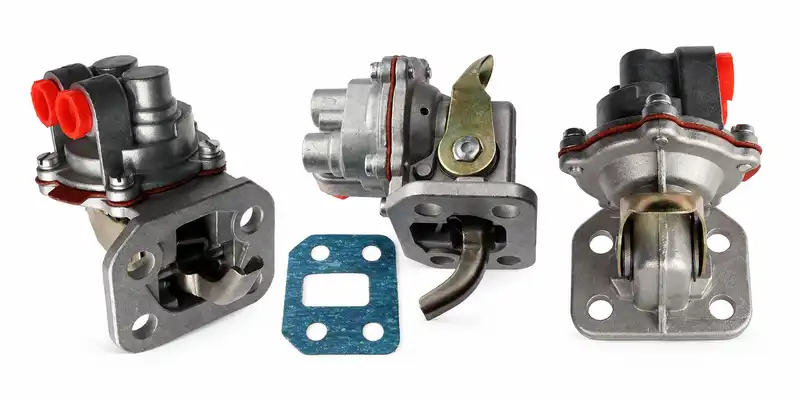
A lift pump draws fuel from the tank and feeds the injection system. Some engines use a mechanical diaphragm pump. Others use an electric pump or a pump built into a larger fuel module. The Perkins fuel-system overview makes the distinction clear: the transfer pump supplies fuel; the injection pump creates injection pressure.
Find the pump and the approved test port on your engine before testing. A common-rail engine also has high-pressure lines and a rail. Leave those connections closed during a lift-pump test. For the whole fuel path, see Diesel Fuel Pumps Explained: Types and How They Work.
Diesel Lift Pump Failure Symptoms Under Load and at Startup
Long cranking after the machine sits. The engine may need extra time to build a steady fuel supply. First check whether the system loses prime through a loose filter seal, drain valve, or suction hose. A slow start alone does not prove the pump failed.
Power falls during digging or travel. The engine may idle well but slow down when fuel demand rises. Record low-side pressure during the complaint, not only at idle. A blocked pickup or filter can produce the same pattern.
The engine stalls, then restarts. Supply may recover while the machine rests. Check whether a vented tank cap changes the complaint, but follow the machine maker’s procedure before running with a cap loose. A plugged tank vent can make a healthy pump look weak.
The filter housing will not stay primed. Air entering ahead of the pump can interrupt fuel flow without leaving an obvious wet leak. Look at the filter seal, water-separator drain, hose joints, and tank pickup. Repair the air entry before judging pump output.
An electric pump stays silent when it should run. Do not assume every pump runs continuously with the key on. Some controllers power it only for a short prime cycle or while cranking. Check the machine’s command sequence, then test power and ground at the pump.
None of these signs identifies the lift pump by itself. Donaldson fuel-filter guidance explains that the primary filter protects the transfer pump on the suction side. Check that path before treating low outlet pressure as proof of pump wear.
Separate a Weak Lift Pump From a Blocked Filter
Start on the inlet side. Check fuel level, the tank vent, the pickup, the water separator, and the filter element. If the element is loaded, use the checks in 7 Signs Your Machine Has a Clogged Diesel Fuel Filter before blaming the pump.
| What you find | What it may mean | Next check |
|---|---|---|
| Supply falls as inlet restriction rises | Tank pickup, hose, or filter is restricting flow | Find where restriction rises |
| Air appears in a permitted clear-line test | Fuel is entering with air on the suction side | Inspect seals, fittings, drain, and pickup |
| Electric pump has no power during a commanded run | Relay, fuse, wiring, or control fault | Test the pump circuit |
| Pump has proper power and clear inlet, but outlet pressure stays below the engine specification | The pump may be weak | Confirm flow and test conditions |
For an electrical fault, 6 Bad Fuel Pump Relay Symptoms on Heavy Equipment explains the circuit checks. Do not replace a working pump to fix a dead feed wire.
How to Test a Diesel Lift Pump Step by Step
Step 1: Get the engine-specific test value
Record the engine model, serial number, pump type, and test-port location. Read the service procedure for the required gauge, engine speed, and test condition. A pressure number from another engine is not a pass/fail limit for yours.
Step 2: Check what reaches the pump
Inspect the tank supply, shutoff valve, hoses, water separator, and filter. Look for leaks, crushed hose sections, trapped air, water, or heavy debris. Correct an inlet restriction before measuring the pump as a failed part.
Step 3: Check the drive or electrical command
For an electric pump, measure voltage and ground while the controller commands it to run. A silent pump with no supply voltage points to the circuit, not the pump motor. For a mechanical pump, follow the engine manual to inspect its drive and external leaks.
Step 4: Measure low-side output
Connect the specified gauge at the approved low-pressure test point. Compare pressure during cranking, idle, or load as the engine procedure directs. If the manual calls for a flow test, use its container, time, and safety instructions; pressure alone may miss a flow problem.
Step 5: Confirm the result after the simple repairs
Retest after fixing a blocked filter, air leak, or weak electrical feed. If inlet supply is clear, the pump receives the correct drive or power, and output still fails the engine specification, replacement becomes a stronger decision. Record the test values before removing the old pump.
A published Cummins CFP83 manual gives one industrial-engine example: filter-inlet pressure should exceed 42.3 kPa (6 psi) at high idle on that engine. It also directs technicians to check voltage if its transfer pump does not run. That is a CFP83 test value, not a target for every excavator or diesel lift pump.
What Makes a Lift Pump Fail Early?
Dirty fuel can wear a pump or load its inlet screen. A restricted pickup makes the pump work against poor supply. Loose suction fittings draw air into the system, while damaged wiring or a poor ground can slow an electric pump. Fix the cause or the replacement may face the same fault.
Keep dirt out while the fuel system is open. Perkins maintenance tips say to clean around a connection before opening it and cover exposed ports. The same guidance warns that common-rail pressure can remain after shutdown; follow the exact engine’s waiting time and service procedure.
Match the Replacement Lift Pump, Not Just the Engine Name
Compare the old part number, engine serial number, mounting, ports, and pump style. An assembly that includes a water separator is not the same order as a bare transfer pump. Even pumps listed for one engine family can differ by equipment application.
For example, Amoparts lists an RE529643 assembly for specified John Deere 4045 and 6068 applications. That listing shows why the old number and machine details matter more than a broad “John Deere lift pump” search. Use the product listing as a fitment lead, not proof that it fits every 4045 or 6068 engine.
Before You Replace the Pump
A hard start or power loss can begin anywhere between the tank and the injection system. Test the inlet path, confirm the electric supply or mechanical drive, and measure lift-pump output under the condition that causes the complaint. A below-spec result matters only after those other faults are ruled out.
Need a replacement? Browse Amoparts fuel pumps, but check that the listing is a low-pressure supply pump, not an injection pump. For an assembly with an unreadable tag or an uncertain serial-number break, send a parts inquiry before the machine is opened again.


