
Alternator vs Starter: What’s the Difference? (Heavy-Duty Truck Guide)

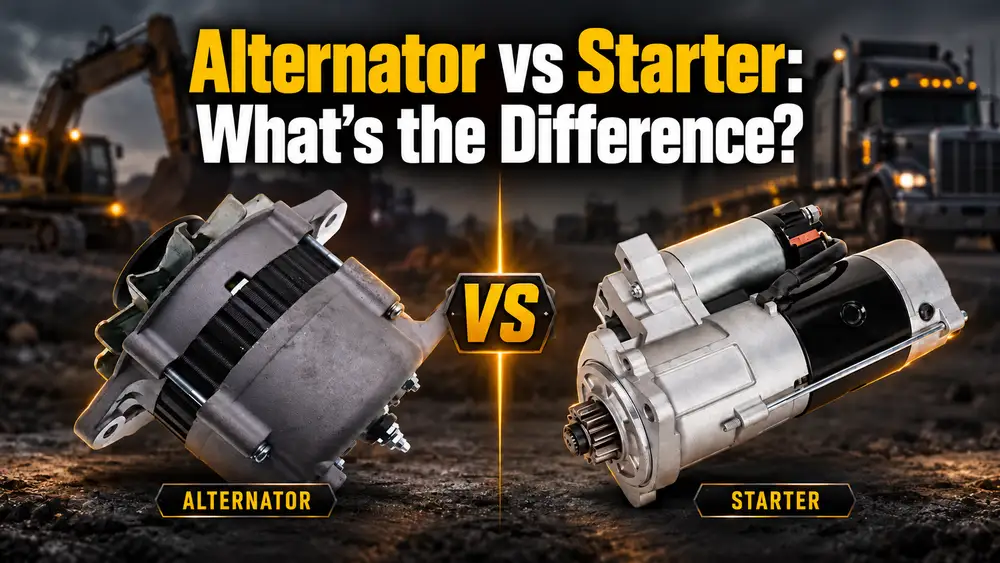
Alternator vs starter: what’s the difference? A starter motor uses battery power to crank the diesel engine, while the alternator generates electricity after the engine starts, powers the truck’s electrical systems, and recharges the battery. This heavy-duty truck guide compares their functions, failure signs, testing methods, and replacement considerations so you can identify the correct part before ordering.
⚠️ Safety First: Always disconnect the negative battery terminal before inspecting or removing either component. Never short the alternator’s B+ terminal to ground — it can cause sparks, burns, or fire. If you’re unsure at any step, have a certified technician perform the test.
Regardless of brand, alternators and starter motors wear out over time and need to be replaced. However, many people will discuss alternators and starter motors during repairs. When a vehicle won’t start, people usually initially suspect a low battery. However, in reality, the alternator works by converting mechanical energy into electrical energy. Meanwhile, the starter motor converts electrical energy from the vehicle’s battery into mechanical energy to start the engine.
When it comes to construction machinery parts and basic maintenance knowledge, it’s crucial to understand the differences between components like alternators and starter motors, especially for those who regularly operate heavy equipment. Here, we’ll help you differentiate between them and watch out for various symptoms.
Alternator vs Starter: Quick Comparison
The easiest way to remember the difference: the starter gets the engine running, and the alternator keeps everything running once it’s on.
| Feature | Alternator | Starter Motor |
| Main job | Generates electricity and recharges the battery | Cranks the engine to start combustion |
| When it works | Runs continuously while the engine is on | Works for a few seconds when the key is turned |
| Powered by | The engine’s serpentine belt | The battery through the solenoid |
| Key parts | Rotor, stator, rectifier, voltage regulator | Solenoid, armature, Bendix drive gear |
| Failure signs | Dead battery, dim or flickering lights, battery warning light | Click with no crank, slow cranking, grinding at startup |
| Typical lifespan | 100,000 to 150,000 miles | 80,000 to 120,000 miles |
| Repair or replace | Replace; the rectifier or regulator may sometimes be repairable | The solenoid may be repairable; replace a burnt motor |
What Is an Alternator?
An alternator is an electrical generator that converts mechanical energy from the engine into electrical energy. It charges the battery while the engine is running and powers lights, sensors, control panels, and other electrical systems.
How the Alternator Works
- The engine’s serpentine belt spins the alternator while the engine runs.
- A rotor, which is an electromagnet, spins inside a stator made of copper windings and produces alternating current.
- A rectifier converts alternating current to direct current for the truck’s electrical system.
On a typical 12V system, the voltage regulator controls charging output according to operating conditions. Heavy-duty trucks may use 12V or 24V systems, so always compare test results with the manufacturer’s specifications.
Common Alternator Failure Causes
- Worn brushes – Carbon brushes supply power to the rotor and wear over time.
- Failed diode or rectifier – A failure causes weak charging or no charging.
- Bearing failure – Worn bearings can cause grinding noise and belt wear.
- Loose or broken belt – The alternator cannot generate power if it does not spin.
What Is a Starter Motor?
A starter motor is an electric motor that turns the crankshaft until combustion begins. Its position varies by engine and chassis, so use this starter motor location guide if the unit is not easy to identify.
How the Starter Motor Works
- When the key is turned, the solenoid closes and sends battery power to the starter motor.
- The Bendix drive extends and meshes with the engine’s flywheel.
- The starter motor spins the flywheel and cranks the engine until it starts.
- After the engine starts, the Bendix retracts to prevent damage.
Common Failure Causes
- Starter solenoid failure – The solenoid clicks but does not engage the motor.
- Worn Bendix gear – Worn teeth can cause grinding during startup.
- Burnt windings – Excessive cranking can overheat and damage the motor.
- Corroded connections – Poor cable contact reduces current to the starter.
How to Test an Alternator and Starter Motor
Testing the Alternator
- Alternator voltage check – The battery should read approximately 12.6 V with the engine off and 13.5 to 14.5 V with the engine running. A lower running voltage can indicate a charging problem.
- Load test – Turn on the headlights, air conditioning, and other electrical loads. The voltage should remain stable.
- Belt inspection – Check the belt for cracks, looseness, or slippage.
Testing the Starter Motor
- Battery check – Confirm that the battery bank is fully charged and load-tested before diagnosing the starter. Test each battery separately and follow the specifications for the truck’s 12V or 24V electrical system. A weak battery can mimic starter failure.
- Voltage drop test – Check the cables and solenoid for excessive resistance.
- Bench test – Remove the starter and apply power directly to confirm whether the motor spins.
For an accurate alternator vs starter diagnosis, begin by testing the battery bank, cables, terminals, belt, and electrical connections.
Before replacing either unit, inspect the belt, battery bank, cables, terminals, and electrical connections. For a detailed diagnostic sequence, refer to the Delco Remy Heavy-Duty Troubleshooting Guide.
Alternator vs Starter Symptoms: Which Part Is Failing?
Alternator Problems
| Symptom | Possible Cause | Recommended Action |
| Battery keeps dying | Faulty alternator or damaged belt | Test alternator output and replace the failed part |
| Dim or flickering lights | Weak alternator or faulty regulator | Check charging voltage under load |
| Squealing noise | Worn belt or alternator bearings | Replace the belt or repair the bearings |
Starter Motor Problems
| Symptom | Possible Cause | Recommended Action |
| Click but no crank | Dead battery or faulty solenoid | Jump-start the truck and test the solenoid |
| Grinding noise | Worn Bendix gear or damaged flywheel | Replace the starter or damaged flywheel teeth |
| Slow cranking | Weak battery or corroded cables | Charge the battery and clean the connections |
Preventive Maintenance
For the alternator: Inspect the belt for wear, keep the terminals clean and tight, and check charging voltage periodically.
For the starter motor: Avoid long cranking because it overheats the motor. Keep battery terminals free of corrosion and listen for unusual noises during startup.
When to Replace vs. Repair?
- Alternator: If the voltage regulator or rectifier fails, sometimes it can be repaired. If bearings or windings are bad, replacement is better. Review the alternator replacement cost before making the final choice.
- Starter Motor: Solenoids can sometimes be replaced separately, but if the motor is burnt out, a full replacement is usually needed. After confirming the fault, use the starter installation guide to plan the job.
Use this alternator vs starter checklist before ordering a replacement. A no-start condition may also be caused by a weak battery, corroded cables, a loose belt, a faulty relay, or damaged wiring. Confirm the voltage, mounting configuration, connector type, amperage or starter tooth count, and original part number before purchasing.


