
CAT Injector Trim Codes: How to Find and Program Them

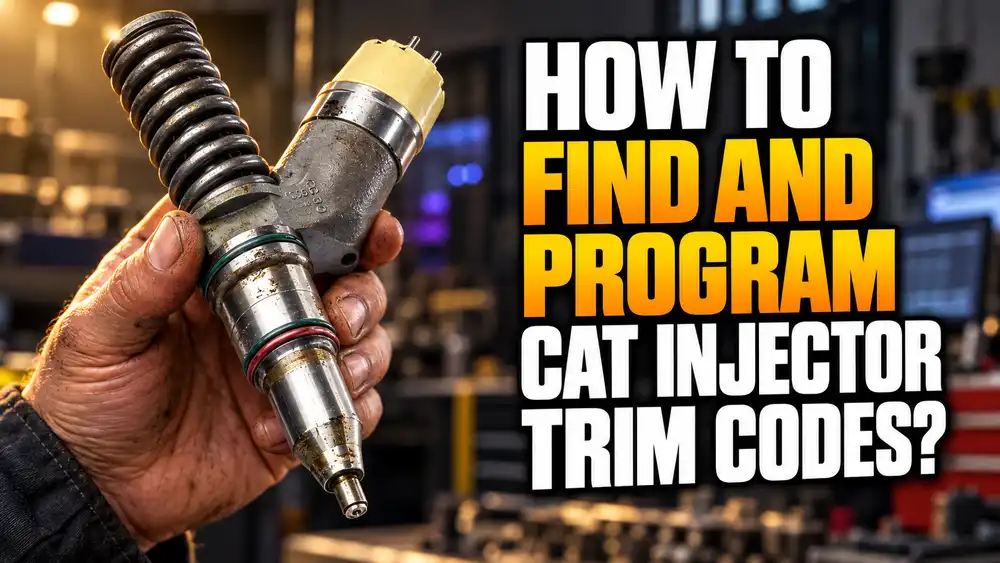
A replacement CAT injector can have the correct part number and still need one more setup step. Some engines use injector calibration data. On these engines, the engine control module (ECM) must know which injector is in each cylinder. The data may be a trim code, injector code, or trim file.
Do not treat the injector part number as the trim code. The part number helps confirm fitment. The trim data describes one injector and tells the ECM how to control it. The method depends on the engine serial number, ECM software, and fuel system.
What Is a CAT Injector Trim Code?
Small build differences affect how fast an electronic injector responds. They can also change how much fuel it delivers. A test bench measures those differences. The code or file lets the ECM correct its command for that injector.
The goal is even fuel delivery across the engine. Correct data can support a smooth idle and balanced cylinder output. It cannot repair a worn nozzle or damaged solenoid. It also cannot fix low compression, dirty fuel, or a wiring fault.
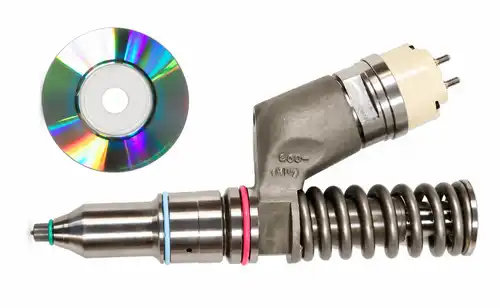
Some CAT engines use a short code that a technician enters. Other systems use a longer code or a file tied to the injector serial number. Code length is not the same on every engine. Copy the exact data for the engine and injector in front of you. Do not expect a fixed number of characters.
Why CAT Injector Calibration Matters
The ECM links calibration data to a cylinder. A new injector should not run with the old injector’s data. The ECM would apply the wrong correction. If two injectors swap cylinders, their records may also need to move. Follow the service steps for that engine.
Wrong or missing data may cause rough idle, smoke, poor response, or a fault. It can also upset fuel balance between cylinders. These signs do not prove that coding is the only problem. If the machine still has fuel injector symptoms, test the fuel supply and wiring. Check compression and injector condition too.
Where to Find the Code on a CAT Injector
Inspect the upper injector body. Check the area near the solenoid or electrical plug. You may find a laser-etched code, serial number, data matrix, or label. The box or test sheet may show the same data.
Clean only the outside with a lint-free cloth. Shine a light across the marking, then take a clear photo. Record the code before installation. The valve cover may hide it later.
Do not mix up these identifiers:
- Part number: identifies the injector design and application.
- Injector serial number: identifies one physical injector.
- Trim code or injector code: supplies calibration data for that injector.
- Trim file: a digital calibration record tied to the injector or serial number.
- Remanufacturing number: tracks the repair source and may not be an ECM entry code.
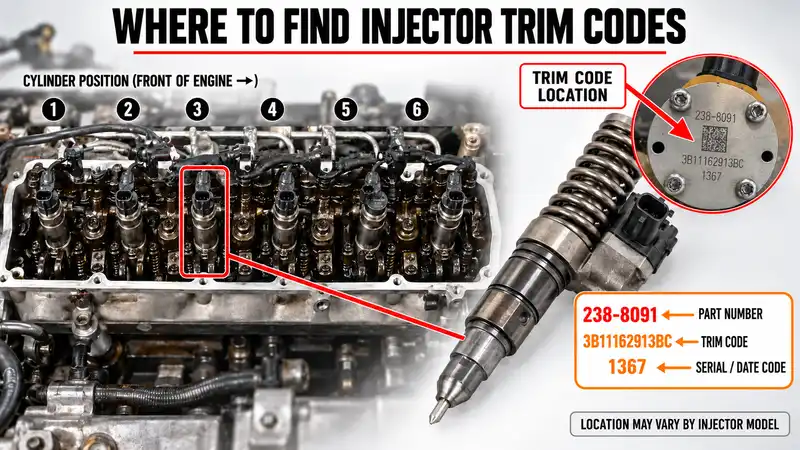
Example TRIM CODE LOCATION from Injector Dataplate
From the dataplate in the uploaded image:
- Part Number.: 238-8091
- Trim Code: 3B11162913BC
- Serial/Date Code: 1367
Which CAT Injectors Need Programming?
Not every Caterpillar fuel system uses the same process. Older mechanical injectors have no ECM data to enter. Many electronic systems use a code for each injector. Some newer systems use a file tied to the injector serial number.
Do not decide from the engine family name alone. A C7, C9, or C6.6 setup can vary by machine and serial prefix. Injector type and ECM software can also differ. Check Caterpillar service data with the full engine serial number. Caterpillar explains these functions in its Cat ET overview.
Use this service-event check before opening the calibration screen:
| Service event | What to verify |
|---|---|
| One injector replaced | Enter or load the new injector’s data for that cylinder if the service procedure requires it. |
| Full injector set replaced | Record every injector and match each calibration record to its installed cylinder. |
| Injectors moved between cylinders | Update the cylinder assignments; do not leave the old codes in place. |
| ECM replaced or reprogrammed | Confirm that all injector data remains present and correct. |
| Same injectors returned to the same cylinders | Compare the stored data with the service record before changing anything. |
How CAT Codes Differ From Cummins and Detroit
Heavy-duty diesel makers do not use one shared name or one service tool. This article focuses on Caterpillar because Amoparts carries CAT excavator injectors. Cummins and Detroit still make useful comparisons. They show why a technician should never apply one brand’s code format or screen steps to another brand.
Caterpillar
CAT service records may show an injector code, injector trim calibration, injector serial number, or trim file. Technicians use Cat ET for supported ECM setup and calibration work. The exact screen and data type depend on the engine serial number and software.
Cummins
Some Cummins electronic engines use injector barcode data. Cummins INSITE training material even shows a fault for injector barcodes that are missing or out of calibration. Use INSITE and QuickServe steps for that engine. Do not enter a Cummins barcode as if it were a CAT trim code.
Detroit Diesel
Detroit also uses injector programming data on supported engines. Detroit explains the risks of incorrect programming codes. Detroit service work uses its own tools and instructions. That code should not be used in Cat ET.
What You Need Before Opening CAT ET
Gather the facts before you connect the service tool. This prevents guesswork after the injectors are under the valve cover.
- Full machine model and serial number
- Engine model, serial number, and arrangement number
- Old and new injector part numbers
- Injector serial numbers and trim-code photos
- A cylinder-position record
- The correct Caterpillar service procedure
- A licensed Cat ET setup and supported communication adapter
- Stable machine voltage during ECM work
- Calibration sheets supplied with rebuilt or replacement injectors
A basic code reader may show faults but lack the needed function. Menu names can change with the ECM and software version. Access rules can change too. Follow the service data for that serial number.
How to Program CAT Injector Trim Codes With CAT ET
The steps below explain the work. They do not replace the Caterpillar steps for your engine. Stop if the engine identity, cylinder count, or injector type does not match the machine.
1. Confirm the Injector Before Installation
Match the new part number to the old injector. Also check the engine serial number and machine model. Confirm that the injector includes the needed code, serial data, or trim file. A matching plug does not prove fitment.
Keep each injector in a labeled tray. Write down its cylinder and photograph every mark. This record keeps a good code out of the wrong cylinder.
2. Save the Existing ECM Record
Connect Cat ET and confirm a link with the engine ECM. Save a product status report. You can also record the current injector fields and fault codes. Do this before changing any value.
Compare the stored cylinder data with the injectors removed from the engine. A previous repair may have left the codes reversed or incomplete.
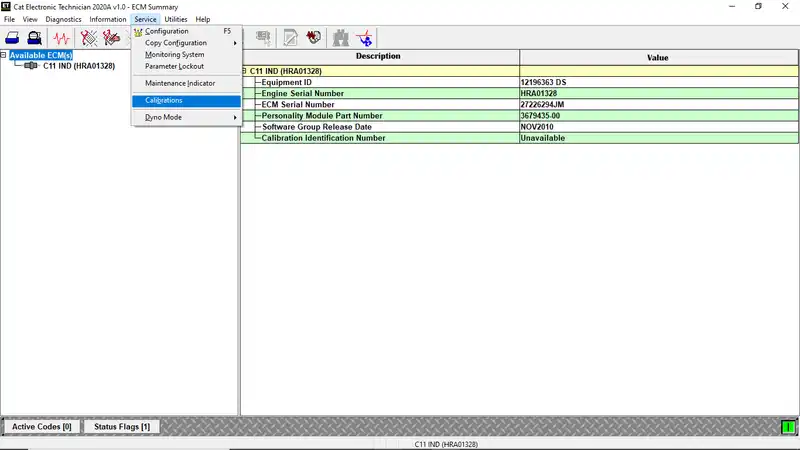
3. Open the Injector Calibration Screen
Stop the engine. Follow the correct Cat ET path to the injector code or trim function. The screen name and menu path can change by engine and software release. Select only the cylinders involved in the repair. Change the full set only when the service steps call for it.
If the trim screen is missing, do not select a different engine to force the job. Recheck the ECM identity and software file. Then check the data link, access level, and injector type.
4. Enter the Code or Load the Required File
Type the code exactly as shown. If the engine uses a file, load the one tied to that injector serial number. Check similar marks such as 0 and O, 1 and I, or 5 and S. Do not add spaces or shorten the code. Never copy data from another injector.
Read the cylinder number back from the screen. Check the injector serial number and trim data too. Do this before you save. Never enter a full set from memory.
5. Save, Cycle the Key, and Verify
Follow the prompts until Cat ET confirms the change. Cycle the key only when the service steps call for it. Reconnect and check the new data. It must stay with the correct cylinder.
Start the engine only after the record is complete. Check for leaks from a safe distance. Never touch a live high-pressure fuel part. Review the fault codes. Run the listed cylinder cutout, balance, or function test when required.
What If the CAT Trim Code Is Unreadable?
Do not guess a damaged character. Never build a trim code from the part number. Check the box, trim sheet, test report, and photos from before the repair. A diesel shop may also have a record tied to the injector serial number.
Some CAT engines use a trim file instead of a code you type. The engine and service system set the file method. If you cannot confirm the needed data, stop the job. Contact an approved service source or the injector supplier.
Why CAT ET Rejects an Injector Code
An “invalid” or “out of range” message often points to a wrong character or code type. The injector may not match the ECM software. A missing trim screen may mean that the selected engine does not support that function. It can also point to an access problem.
If the engine runs worse, compare each injector with the stored data. Check one cylinder at a time. Then inspect the plug, harness, injector seal, fuel supply, and engine compression. A saved code does not prove that the injector or engine is healthy.
CAT Excavator Injector Examples From Amoparts
Amoparts lists a C9 injector for the CAT 336 excavator. The product page lists part number 328-2580 and several cross-reference numbers. Those numbers help identify the part. They are not the trim code for one injector.
The C7 injector is listed under part number 263-8218 for the 324D, 325D, 326D, 328D, and 329D excavators. This list shows why the machine model alone is not enough. Confirm the engine serial number before ordering. Check the trim data before installation.
These examples show two different checks. First, use the part number and engine data to select the injector. Second, use the code, serial number, or trim file tied to that physical injector. Do this when the CAT service steps call for trim work.
Final Thoughts
At AmoParts, we understand that the proper functioning of fuel injectors is critical to engine performance. That’s why we stock a wide variety of high-quality fuel injectors covering nearly every engine model, all with the correct trim codes. Whether you need to replace a single faulty injector or perform a complete set replacement, our team can help you find the right parts.
If test results indicate a faulty fuel injector, be sure to verify that the injector model matches the part number. If you need help finding fuel injectors compatible with your engine, please feel free to contact our support team. We are available Monday through Friday, 9:00 a.m. to 6:00 p.m. Eastern Standard Time (EST); you can call us at +852-53202672 or email us at [email protected].
Choose fuel injectors from AmoParts with the correct trim codes to ensure your engine performs at its best!


