
How does Common Rail Injection work?

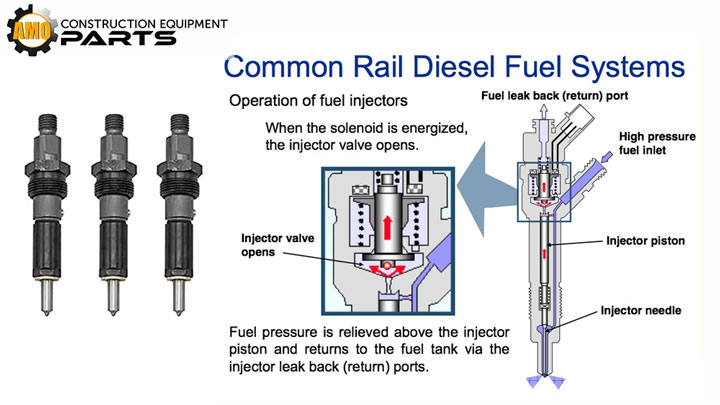
Common Rail Injection (CRI) is an advanced fuel injection technology used primarily in diesel engines.
Its working process is divided into three steps:
- Initial State:
When the injector solenoid valve is not activated, it remains closed, and the bleed hole is also closed. The small spring forces the armature’s ball valve against the throttle hole, creating high pressure in the control chamber from the common rail. Similarly, high pressure is formed within the injector from the common rail. The control piston is subjected to the pressure of the common rail and the spring force of the nozzle, which is balanced with the opening force of high-pressure fuel acting on the cone surface of the needle valve, keeping the needle valve closed. - Start of Fuel Injection:
When the solenoid valve is triggered and activated, the armature opens the bleed hole, allowing fuel to flow from the control chamber into the upper cavity and return to the fuel tank through the return oil pipe, causing the control chamber pressure to drop. The reduced pressure in the control chamber decreases the force acting on the control piston, which opens the nozzle needle valve, initiating fuel injection. - End of Fuel Injection:
Once the solenoid valve loses the electrical signal and is no longer triggered, the small spring forces the solenoid valve down, and the ball valve closes the bleed hole. Fuel enters the control chamber through the inlet hole, rebuilding the oil pressure. The combined force of the common rail pressure and the spring is greater than the pressure on the cone surface of the needle valve, causing the nozzle needle valve to close and ending the fuel injection.
The fuel injection system we understand includes the following operation processes:
- Fuel supply: The system includes a high-pressure pump with a pressure control between 1,000 and 3,000 bar (14,500 and 43,500 psi). The pump draws fuel from the fuel tank and pressurizes it to a very high level. This pressurized fuel is then delivered to the common rail.
- Common rail: The common rail is a high-pressure reservoir that stores pressurized fuel. It distributes fuel to individual injectors based on commands from the engine’s electronic control unit (ECU). The common rail ensures that each injector receives fuel at the same high pressure, regardless of engine speed or load conditions.
- Injectors: Each cylinder has its own injector connected to the common rail. These injectors are electronically controlled solenoid valves or piezoelectric actuators. When the ECU sends a signal, the injector opens and sprays a precise amount of pressurized fuel directly into the combustion chamber. The fuel is atomized into a fine mist to ensure thorough mixing with the air for efficient combustion.
- Injection Timing and Multiple Injections: CRI allows extremely precise control of the timing and amount of fuel injected into each cylinder. The ECU can adjust injection timing and perform multiple injections during each combustion cycle. This feature enables:
- Pilot Injection: A small amount of fuel is injected before the main injection to reduce combustion noise and emissions.
Main Injection: The main fuel injection event that provides the majority of the fuel for power generation. - Post-injection: Additional injection after the main injection to further control emissions and improve combustion efficiency.
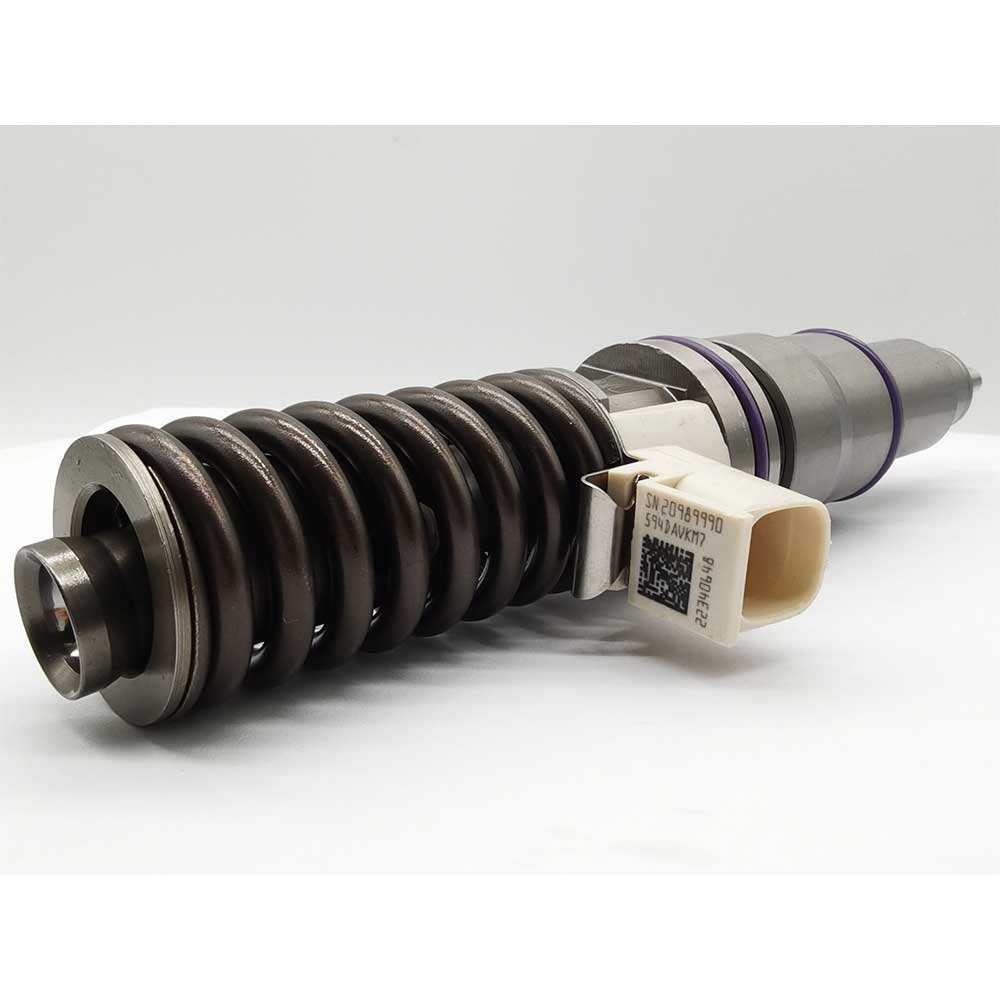
In the working process of common rail injection, every link makes its fuel efficiency and power performance reach the optimal solution
Advantages:
Fuel efficiency: Precise control of fuel injection can improve combustion efficiency, thereby reducing fuel consumption.
Emission reduction: Optimal injection time and multiple injections help reduce emissions of nitrogen oxides (NOx) and particulate matter (PM).
Power and performance: Improved combustion efficiency and better control of injection parameters help improve engine power, responsiveness and running smoothness.
Components: In addition to the high-pressure pump, common rail, injector and ECU, the system also includes various sensors (such as pressure sensors, temperature sensors and position sensors) to provide real-time data to the ECU for precise control.
In short, common rail injection revolutionizes fuel delivery in diesel engines by providing precise control over fuel injection parameters, which can improve efficiency, reduce emissions and enhance performance compared to traditional injection systems.
Follow high-quality injector supplier – Amoparts | Right Parts, Quick Fix.


