
7 Low Oil Pressure Warning Signs on Heavy Equipment

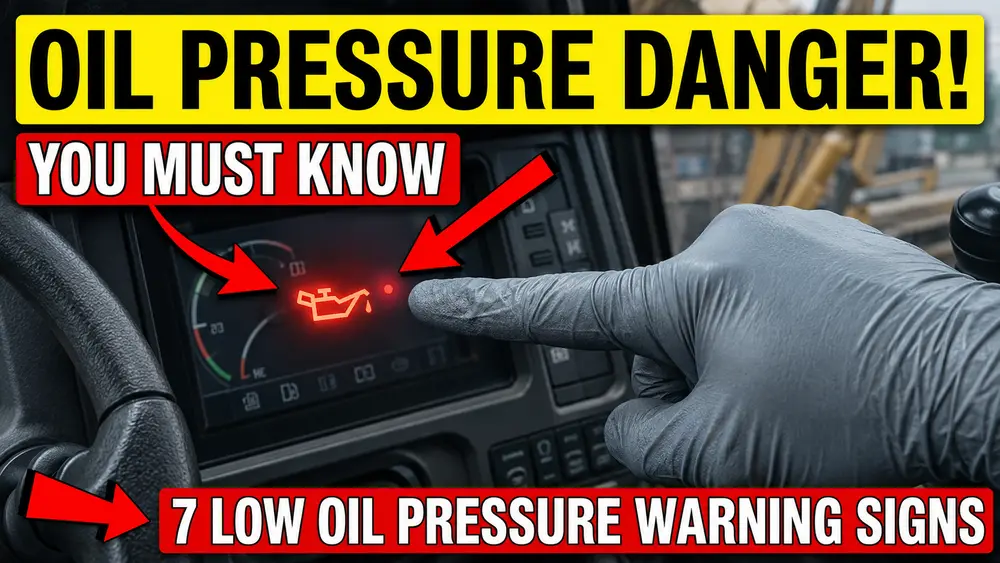
A wheel loader completes its morning checks with a normal oil level. Forty minutes later, the oil pressure light flickers each time the engine returns to idle. The operator raises the speed, the light goes out, and the machine sounds normal.
That pattern is not permission to keep loading. It is one of several low oil pressure warning signs that can appear before a diesel engine starts knocking. Lower the attachment, park safely, and treat the warning as real until a pressure test proves otherwise.
This guide covers excavators, tractors, loaders, generators, and other heavy equipment. It explains what low pressure means, the warning signs, the common and mechanical causes, the correct test order, and when the engine can run again.
Safety first: Follow the machine’s parking and lockout procedure. Keep hands, clothing, tools, and test hoses away from hot surfaces, fans, belts, and other moving parts.
What Is Low Engine Oil Pressure?
The oil pump moves oil from the sump through the filter and into the engine galleries. The galleries feed crankshaft bearings, connecting-rod bearings, the camshaft, valve-train parts, piston cooling jets, and the turbocharger on many diesel engines.
Low engine oil pressure means the system cannot maintain the pressure required under a stated operating condition. Low oil level can cause it, but pressure also depends on oil viscosity, pump flow, filter condition, pressure control, and the amount of oil escaping through internal clearances.
A warning lamp or dashboard message cannot identify the failed part. It tells the operator that the reading crossed a limit or that the signal circuit has a fault. The warning begins the diagnosis; it does not prove that the pump has failed.

What Is Normal Engine Oil Pressure on Heavy Equipment?
Normal pressure is the range specified for the exact engine at a stated oil temperature and engine speed. Cold startup, hot idle, rated speed, and loaded operation can produce different readings. Test-port location can also change the number.
Do not apply a passenger-car rule or a universal PSI range to heavy equipment. A compact tractor, crawler excavator, and industrial generator may use different pumps, galleries, bearing clearances, and warning limits. Use the service information tied to the engine model and serial range.
Compare like with like. A hot-idle specification cannot judge a cold engine, and a dashboard gauge cannot replace a calibrated mechanical gauge when the reading is in doubt.
How a Diesel Engine Lubrication System Builds Oil Pressure
The pump creates oil flow. Resistance to that flow at the bearings, galleries, jets, and control valves creates pressure. A relief valve limits excessive pressure by opening at its designed setting.
Oil first has to reach the pump as a solid supply. A low sump level, uncovered pickup, blocked screen, cracked pickup tube, or leaking inlet seal can make the pump draw air. Aerated oil cannot support stable pressure.
After the pump, the oil must pass through the filter and galleries without losing too much pressure through a stuck relief valve or worn engine clearances. This is why a full dipstick does not guarantee safe oil pressure.

Low Oil Pressure Symptoms That Need Immediate Attention
Low oil pressure symptoms fall into three useful groups. Direct warnings include an oil-pressure lamp, low gauge reading, or controller message. Operating patterns include delayed pressure after startup, a hot-idle drop, or a reading that changes on slopes and rough ground.
Damage clues include ticking, knocking, new turbo noise, rising temperature, burned oil, or metal in the filter. Any one of these groups deserves a safe shutdown. The next section explains how the seven main patterns change the diagnosis.
7 Detailed Low Oil Pressure Warning Signs
One symptom can have several causes. Record when it begins, what changes it, and whether the engine develops noise. Those details lead to a better test than replacing the first part named by a fault code.
1. The Oil Pressure Light Stays On After Startup
The warning lamp often turns on during a key-on check. It should clear after the engine builds pressure within the time allowed by the manufacturer. Shut down if it stays on; do not raise engine speed to force the lamp off.
2. Oil Pressure Falls After the Engine Gets Hot
Oil becomes thinner as temperature rises. A worn pump, leaking relief valve, diluted oil, or excessive bearing clearance may not show itself until hot idle. Record oil temperature, engine speed, and load when the reading falls.
3. Pressure Takes Longer to Build After the Machine Sits
A longer delay after an overnight stop can mean that the filter or supply path has drained. A leaking pickup seal or a pump that loses prime can create a similar delay. Avoid repeated cold starts just to watch the warning.
4. The Gauge Changes on Slopes or Rough Ground
Pressure that falls on a slope can point to low oil level, oil moving away from the pickup, or an operating angle outside the machine limit. A reading that jumps over bumps may come from a loose connector, damaged wire, or weak ground. A mechanical gauge separates those paths.

5. Ticking, Tapping, or Knocking Starts With the Warning
Valve-train ticking can follow poor oil delivery near the top of the engine. A deeper knock may indicate that a crankshaft or connecting-rod bearing has lost its oil film. Keep the engine off instead of running it again so another person can hear the sound.
6. Turbo Noise, Rising Temperature, or Derate Appears
Many diesel turbochargers depend on pressurized engine oil. A new whine, smoke, or turbo damage that appears with the warning can indicate a wider lubrication fault. Some engine controllers also reduce power or shut down after detecting low pressure.
7. The Filter Holds Metal or the Oil Looks Wrong
Fine gray material, bronze-colored particles, or flakes in the filter can mark internal wear. Oil that smells of diesel fuel, looks milky, foams, or feels unusually thin can also lose its ability to protect the engine. Do not keep running the machine to see whether the warning returns.
What Causes Low Oil Pressure on Heavy Equipment?
Common causes often sit outside the engine’s main bearing structure. Start with these checks before approving teardown.
- Low oil level: External leakage, oil consumption, an incomplete refill, or an incorrect dipstick reading can uncover the pickup.
- Too much oil: The crankshaft can whip an overfilled sump into foam, and the pump may draw aerated oil.
- Wrong oil grade: Oil that is too thin may lose hot pressure. Oil that is too thick may delay cold circulation.
- Fuel or coolant contamination: Dilution can reduce hot viscosity even when the dipstick shows a full or rising level.
- Incorrect or restricted filter: The wrong bypass design, damaged seal, collapsed element, or blocked media can change oil delivery.
- Oil leak after service: A loose filter, double gasket, drain-plug problem, damaged cooler line, or disturbed turbo oil hose can lower the supply quickly.
- Sensor or wiring fault: A failed sender, loose terminal, weak ground, or damaged harness can report pressure that is not real.
Review recent maintenance first. When the warning begins after an oil change, filter replacement, engine swap, or wiring repair, that timing is valuable evidence.
Additional Mechanical Causes of Low Engine Oil Pressure
Mechanical faults remain possible after the oil level, grade, filter, leaks, and warning circuit pass inspection. Follow the oil path instead of ordering a pump from the dashboard reading.
Pickup Tube and Inlet Seal Problems
A blocked screen limits supply. A cracked tube, loose joint, or hardened O-ring lets the pump draw air without leaving an external oil leak. These faults can create delayed pressure, slope-related warnings, or unstable readings at higher speed.
Oil Pump and Relief Valve Wear
Scored rotors, worn gears, housing clearance, a damaged drive, or an inlet problem can reduce pump output. A relief valve stuck open releases oil before the galleries reach the required pressure. Measure the pump and valve parts against their service limits.
Excessive Engine Bearing Clearance
Main, rod, and cam bearings form controlled leakage paths. Wear enlarges those paths and lets hot oil escape faster. The pump can still move oil while the galleries fail to hold the required pressure.
Oil Pressure Is Low but the Oil Level Is Full
The dipstick measures oil quantity in the sump. It does not measure pump intake, filter flow, relief-valve control, or leakage through bearings and other oil-fed parts. A full sump can sit below a lubrication system that cannot maintain pressure.
The oil itself may also be the problem. Diesel fuel, coolant, excessive heat, soot, or the wrong viscosity can leave the level looking correct while hot pressure falls. Inspect the oil and confirm pressure instead of adding more.
Do not fill above the upper mark. Overfilling can aerate the oil and create an unstable pump supply. Find the reason for the warning before changing the level.
How Low Oil Pressure Damages a Diesel Engine
Crankshaft and connecting-rod bearings need a pressurized oil film to keep their surfaces apart. When the film weakens, the bearing can heat, smear, and transfer material to the journal. Debris then moves through the same galleries that should protect the engine.
The camshaft, rocker gear, piston cooling jets, and turbocharger may lose oil at the same time. Continued operation can turn one lubrication fault into crankshaft work, turbocharger replacement, cooler cleaning, or a complete rebuild.
Noise is a late warning on some engines. A quiet engine does not prove that the pressure is safe.
How to Diagnose and Fix Low Engine Oil Pressure

Fix the confirmed cause, not the warning lamp. Use this order and stop when the evidence shows that more engine running could spread damage.
- Save the operating conditions. Record the warning, fault code, engine speed, load, oil temperature, slope, and time since startup.
- Check the oil correctly. Park level, stop the engine, wait as directed, and inspect the level, smell, color, and foam.
- Find active leaks. Inspect the filter, drain plug, cooler, hoses, turbo oil lines, and engine covers.
- Review recent work. Confirm the oil grade, quantity, filter number, seals, and any disturbed wiring or oil lines.
- Inspect the warning circuit. Check the sensor connector, terminal grip, harness, supply, ground, and saved circuit codes. The guide to bad oil pressure sensor symptoms versus real low pressure covers this path.
- Connect a mechanical gauge. Use the approved test port, a clean adapter, safe hose routing, and a gauge with the correct range.
- Compare with the exact specification. Test only at the oil temperature and engine speeds required for the engine model and serial range.
- Inspect the oil and filter. Metal, fuel, coolant, sludge, or a collapsed filter can change the repair decision.
- Repair and retest. Correct the proven fault, clean contaminated parts as required, then confirm pressure before returning the machine to work.
Can You Keep Working With Low Oil Pressure?
No. Lower the attachment, park safely, and shut the engine down. If the machine must move away from an immediate hazard, follow the manufacturer’s emergency procedure. Finishing the shift or driving back to the workshop does not count as an emergency.
| Evidence at the Machine | Immediate Action | Reason |
|---|---|---|
| Warning light or low reading with no noise | Shut down, check oil and leaks, then verify pressure | A quiet engine can still have unsafe pressure |
| Ticking, tapping, or knocking | Keep the engine off and inspect the oil and filter | Damage may already have started |
| Rapid external oil leak | Do not restart | The pump can uncover its pickup quickly |
| Metal in the oil filter | Stop testing and plan an internal inspection | More running can spread debris through the engine and turbocharger |
| Milky oil, fuel smell, or rising level | Find the contamination source before running | The sump may be full while the oil cannot protect the engine |
| Mechanical pressure below the engine limit | Keep the machine out of service | The low reading is physical, not only an electrical warning |
For the full shutdown and return-to-service process, read Low Engine Oil Pressure: Stop the Engine or Keep Working?. That article focuses on what to do after the warning appears.
How to Prevent Low Engine Oil Pressure
Check the level at the interval in the machine manual and before demanding work. Use level ground and the stated waiting time. Track oil consumption instead of topping up without finding the reason.
Use the specified oil grade, service category, and change interval. Fit the correct filter rather than matching thread size alone. Repair oil, fuel, and coolant leaks before contamination reaches the bearings.
Keep service work clean. Seal open ports and use clean funnels, tools, and containers. Gasket fragments and excess sealant can travel directly to the pickup screen.
Watch for changes over time. A longer startup delay, lower hot-idle reading, rising oil level, or new filter debris can expose a problem before the next shutdown.
Why Engine Oil Viscosity Changes Oil Pressure
Viscosity describes how strongly oil resists flow. Oil becomes thinner as it heats, so pressure normally changes between cold startup and hot operation. Multi-grade oil controls that change, but it must still match the engine and ambient-temperature requirements.
Oil that is too thin or diluted can pass through engine clearances too quickly and reduce hot pressure. Oil that is too thick can resist cold flow and delay lubrication after startup. Both conditions can damage parts even if one of them makes the dashboard gauge look higher.
Do not use a thicker grade to hide wear. If the correct hot oil produces low mechanical pressure, inspect the pump, relief system, and engine clearances.
Final Takeaway
An oil-pressure light is easy to reset; bearing damage is not. Let the mechanical gauge divide the job: normal pressure sends you toward the sender and wiring, while low pressure keeps the machine parked and the investigation inside the lubrication system. The engine earns its return to work only when the measured pressure and the original fault both check out.
Did the test trail end at the pump? Use the engine model and old number to find a replacement oil pump by application, not by housing shape alone. For a pump with a worn tag or conflicting cross-reference, ask Amoparts to identify it from the machine details and photos before the wrong part adds another day to the shutdown.


