New vs Remanufactured Fuel Injectors: Which Should You Buy?

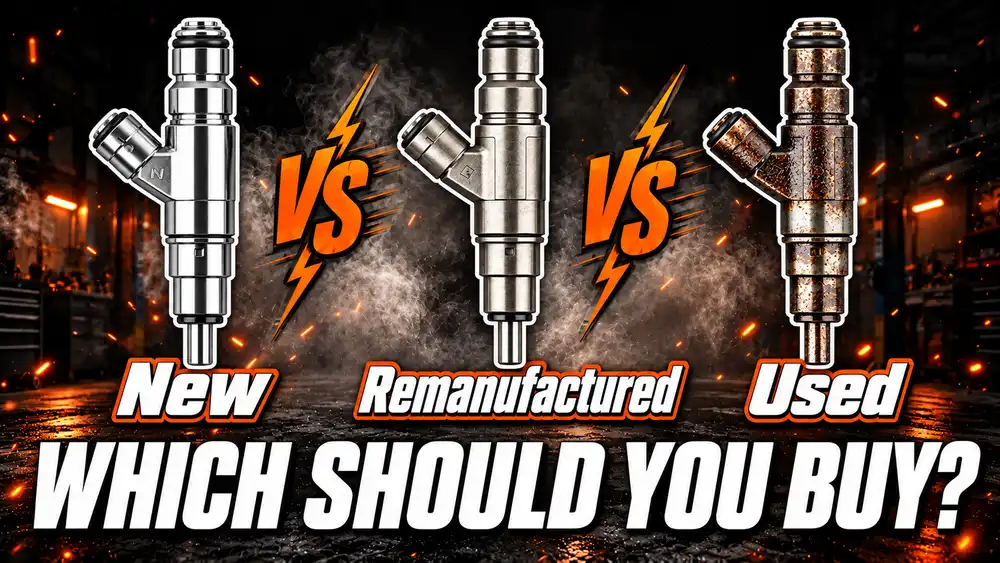
A failed diesel injector creates an expensive choice. Should you buy a new injector? Should you return the old core for a reman unit? Or should you accept a cheaper rebuilt part? These labels do not describe the same product.
New vs remanufactured fuel injectors is not only a price comparison. You must also check fitment, test proof, warranty terms, and fuel-system condition. This guide covers excavators, loaders, tractors, generators, and other diesel equipment.
Why Injector Choice Matters to Your Machine
A diesel injector controls fuel amount, timing, and spray. A poor match can cause hard starts, smoke, rough running, high return flow, or low power. The wrong code can also make a good electronic injector run poorly.
Your decision affects four parts of the repair:
- Reliability: A new or proper reman injector should meet set delivery, leak, and response limits.
- Fitment: The body may fit while the nozzle, plug, flow class, or code does not.
- Downtime: A lower price loses its value when the machine must be opened again.
- Total cost: Core fees, coding, pipes, seals, labor, and cleaning can change the final bill.
The best choice meets the correct spec and comes with test proof. New paint or a clean box proves nothing about the parts inside.
Confirm Engine & Injector Models Before Price Check
Start by identifying the application. Record the machine model and serial number. Then record the engine model and serial number. One engine family may use different injectors across its production years.
Next, identify the injector itself:
- Part number: Read each number from the body, solenoid, tag, or old box.
- Supersession: Check whether the old number changed to a new service number.
- Injector type: Confirm mechanical, common rail, HEUI, or electronic unit injector.
- Cylinder code: Save the trim or correction code when the engine uses one.
- Physical details: Compare the plug, inlet, return port, nozzle length, clamp, and seal face.
Do not choose an injector from the machine model alone. Engines get replaced. Serial-number breaks can also change the correct part. Use the trim-code guide when a CAT engine needs injector data in the ECM

New Vs Remanufactured Vs Used Fuel Injectors How to Choose ?
Once the application is clear, compare what each seller means by new, used, remanufactured, or rebuilt. The name on the listing should match the work performed and the evidence supplied.
1. New OEM Injectors
A new OEM injector comes from the equipment maker or its approved supplier. It has no past service life. The part should meet the current spec for the listed engine.
New OEM injectors offer a clear source and service path. They often suit engines under warranty. They also suit machines that must return to full production. The main limits are price, stock, and lead time.
2. New Aftermarket Injectors
A new aftermarket injector comes from outside the OEM parts channel. It uses new parts and should have its own warranty. A sound supplier will list the number, application, condition, and test standard.
Quality varies by maker. Ask if every injector gets final tests for delivery, return flow, leaks, and electrical response. A low price means little without test proof and a clear warranty.
3. Used Injectors
A used injector comes from another engine. It has not gone through a full reman process. A seller may clean or inspect it, but its wear life remains unknown. The old engine’s failure may also be unknown.
Used injectors may suit a short test or a rare mechanical engine. They are a weak choice for a modern common rail system. A coded used injector still needs ID, testing, and setup before service.
4. Remanufactured Injectors
A true reman injector is taken fully apart. Its parts are cleaned, checked, restored, built, set, and tested. The seller may require the old injector as a return core. You get the core fee back only when the seller accepts that core.
The Cat Reman process checks parts before assembly. It then tests delivery, timing, leaks, and calibration. Cat says its reman units pass the same test points as new Cat injectors. The Cummins ReCon standards also call for full teardown, cleaning, checks, and factory testing.
Bosch also treats series reman work as more than a repair. The Bosch eXchange process replaces key wear parts. It also checks size and function. These programs show what a full reman process should include.
5. Rebuilt or Repaired Injectors
A rebuilt injector is not always a reman injector. One shop may replace each key wear part and run a full test. Another may only fix one fault, clean the nozzle, and adjust one value.
Ask for the exact work scope. The invoice should name the new parts and final test results. If the shop cannot show delivery, return, leak, and response data, treat the unit as unproven.
| Option | Previous service life | Evidence to request | Best fit |
|---|---|---|---|
| New OEM | None | OEM number, application, warranty | Warranty-sensitive or critical machines |
| New aftermarket | None | Traceability, full test standard, warranty | Cost-controlled repairs with a proven supplier |
| Used | Yes | Condition and bench results | Rare parts or limited temporary use |
| Remanufactured | Yes | Reman scope, calibration report, core terms | Lower-cost replacement with verified performance |
| Rebuilt or repaired | Yes | Replaced parts and full test sheet | Shop-supported repair with clear measurements |
Key Checks Before Purchasing Diesel Injectors
The condition label does not finish the choice. Check the records, parts, and service terms behind it. Two offers with the same price can be very different.
- Part-number match: The new number must cover the old unit and engine serial range.
- Bench-test evidence: Look for delivery, return flow, leak, and response results.
- Calibration data: Check for a valid trim, correction, or calibration code.
- Included hardware: Check for needed seals, washers, pipes, clamps, and bolts.
- Core terms: Record the return deadline, packaging rules, rejected-core conditions, and possible charge.
- Warranty scope: Check the time limit and exclusions for dirt, wrong setup, damage, and labor.
- Set requirements: Some engines need a matched set or set balance limit.
- Fuel-system condition: Remove metal, water, rust, or sludge before fitting any injector.
Run injector testing before ordering when the fault is not clear. If deposits caused the problem, injector cleaning may restore the unit.

Where to Buy New or Remanufactured Injectors
The seller affects traceability and support. Choose one that can explain the condition and confirm the application. It should also handle a failed unit without guessing.
- OEM dealer: Offers current OEM numbers, factory reman units, and engine support.
- Authorized reman program: A strong choice with clear work, core, and warranty terms.
- Diesel injection shop: Useful when it has the right bench, parts, and data.
- Established aftermarket supplier: Practical when it checks numbers, fitment, and warranty cover.
- Online marketplace or salvage seller: Prices may be low, but proof and support need close review.
Do not judge the seller from photos alone. Ask one question: “What test and warranty prove this injector fits the stated use?” A useful answer should name the standard or show the record.
Before You Order
New OEM injectors offer the clearest factory path. A proper reman injector can provide proven results at a lower price. New aftermarket units can also work well when the maker shows full test and fitment proof. Do not treat used, cleaned, rebuilt, and reman units as equal.
When another wrong order could extend downtime, Amoparts offers injectors for excavators, tractors, and diesel engines. Compare available injectors today. You can also resolve a cross-reference when the old number and engine record do not agree.


